

The Hidden Dangers of Woodshop Dust: Why Most Woodworkers Underestimate the Risk
There's a reason experienced woodworkers talk about dust protection the same way they talk about hearing protection — as something they wish they'd taken more seriously earlier in their career. The damage from woodshop dust exposure is cumulative, largely invisible, and often doesn't show up until years of unprotected work have already taken their toll.
Most woodworkers know dust is a problem. Far fewer understand what it's actually doing to their respiratory system — or why the paper mask they grab off the shelf isn't doing what they think it is. This guide covers the real health consequences of woodshop particulate exposure, why most dust masks fall short, and what proper protection actually looks like.
What Woodshop Dust Actually Does to Your Lungs
The human respiratory system is remarkably effective at filtering large particles — nose hairs, mucus, and the natural architecture of your airways trap most visible dust before it reaches your lungs. The problem is that the most dangerous woodshop particles are the ones you can't see.
Fine wood dust particles — those under 10 microns, and especially those under 2.5 microns — bypass your body's natural defenses entirely. They travel past your nose and throat, past your bronchial tubes, and settle deep in your lung tissue. Your body cannot clear them efficiently. With repeated exposure over months and years, they accumulate.
The consequences of repeated, unprotected wood dust exposure are well-documented by occupational health authorities:
- Respiratory sensitization — repeated exposure to certain wood dusts can cause the respiratory system to become sensitized, leading to increasingly severe reactions to subsequent exposures
- Occupational asthma — wood dust is one of the most common causes of occupational asthma; once sensitized, even low-level exposure can trigger symptoms
- Chronic respiratory irritation — persistent coughing, mucus production, and airway inflammation from accumulated fine particulate exposure
- Long-term lung function changes — cumulative fine particulate exposure is associated with measurable changes in lung function over time
According to OSHA's wood dust guidelines, wood dust is a recognized occupational health hazard with established Permissible Exposure Limits (PELs). The CDC/NIOSH provides specific guidance on wood dust exposure and respiratory protection for woodworkers. IARC classifies hardwood dust as a Group 1 carcinogen with occupational exposure.
The Three Types of Woodshop Particulates — and Why Each Matters
Organic Wood Dust
Natural wood fiber dust — from cutting, sanding, routing, and planing. Includes fine wood fiber particles, natural resins, oils, and in the case of reclaimed or stored lumber, mold spores, biological particles, and accumulated organic matter. Hardwood dust (oak, walnut, cherry, maple) carries greater sensitization risk than softwood dust with repeated exposure. Cedar dust is a known respiratory sensitizer for some individuals.
Composite and Engineered Wood Dust
MDF, plywood, particleboard, and composite decking contain adhesive resins — including urea-formaldehyde in many products — in addition to wood fiber. Cutting, routing, or sanding these materials releases both wood fiber particles and resin compounds. MDF dust is particularly fine and generated at high concentrations during cutting and routing operations. For woodworkers who work with MDF regularly, consistent respiratory protection is especially important.
Finishing Product Vapors and VOCs
Stains, lacquers, polyurethane, shellac, and oil finishes release volatile organic compounds (VOCs) during application and drying. These are gaseous compounds — not particles — and require active carbon filtration to address. A particulate-only mask does nothing to reduce organic finishing odors and VOC exposure. This is why the active carbon layer in RZ Mask F1 and F3 filters matters for woodworkers who do any finishing work.
Why Most Dust Masks Don't Actually Protect You
Paper Masks: The Illusion of Protection
The paper dust masks sold at hardware stores are designed for large particle filtration — the visible sawdust that settles on your bench. They are not designed to filter fine wood dust particles, and they do not create a meaningful seal against your face. Fine particles — the ones that cause the most damage — enter freely through gaps around the nose and cheeks. Wearing a paper mask in a woodshop provides psychological comfort more than actual respiratory protection.
Disposable N95s: Better, But Incomplete
N95 respirators filter 95% of particles at 0.3 microns when properly fitted — a meaningful improvement over paper masks. But they have no active carbon, which means no organic odor reduction during finishing work. They trap heat and moisture inside with no active exhaust, making extended wear uncomfortable. And they're single-use, which makes them expensive for regular woodworkers. For occasional use, an N95 is adequate. For regular woodshop work, a reusable mask with active carbon is the smarter choice.
The Seal Problem: Where Most Masks Fail
Filtration rating only matters if the mask seals completely against your face. Any gap — at the nose bridge, along the cheeks, under the chin — is an unfiltered air pathway. Fine wood dust doesn't wait for the filter. It takes the path of least resistance straight into your airways. This is why a mask with a proper adjustable nose clip and 360° perimeter seal is fundamentally different from one that relies on a generic metal strip and elastic bands.
What Proper Woodshop Respiratory Protection Looks Like
An effective woodshop mask needs to deliver four things simultaneously:
- Fine particle filtration — down to 0.1 micron to capture the particles that matter most
- Active carbon — for organic odor reduction during finishing work
- A complete seal — adjustable nose clip and 360° perimeter contact that holds through active physical work
- Breathability for all-day wear — because a mask you pull off is a mask that isn't protecting you
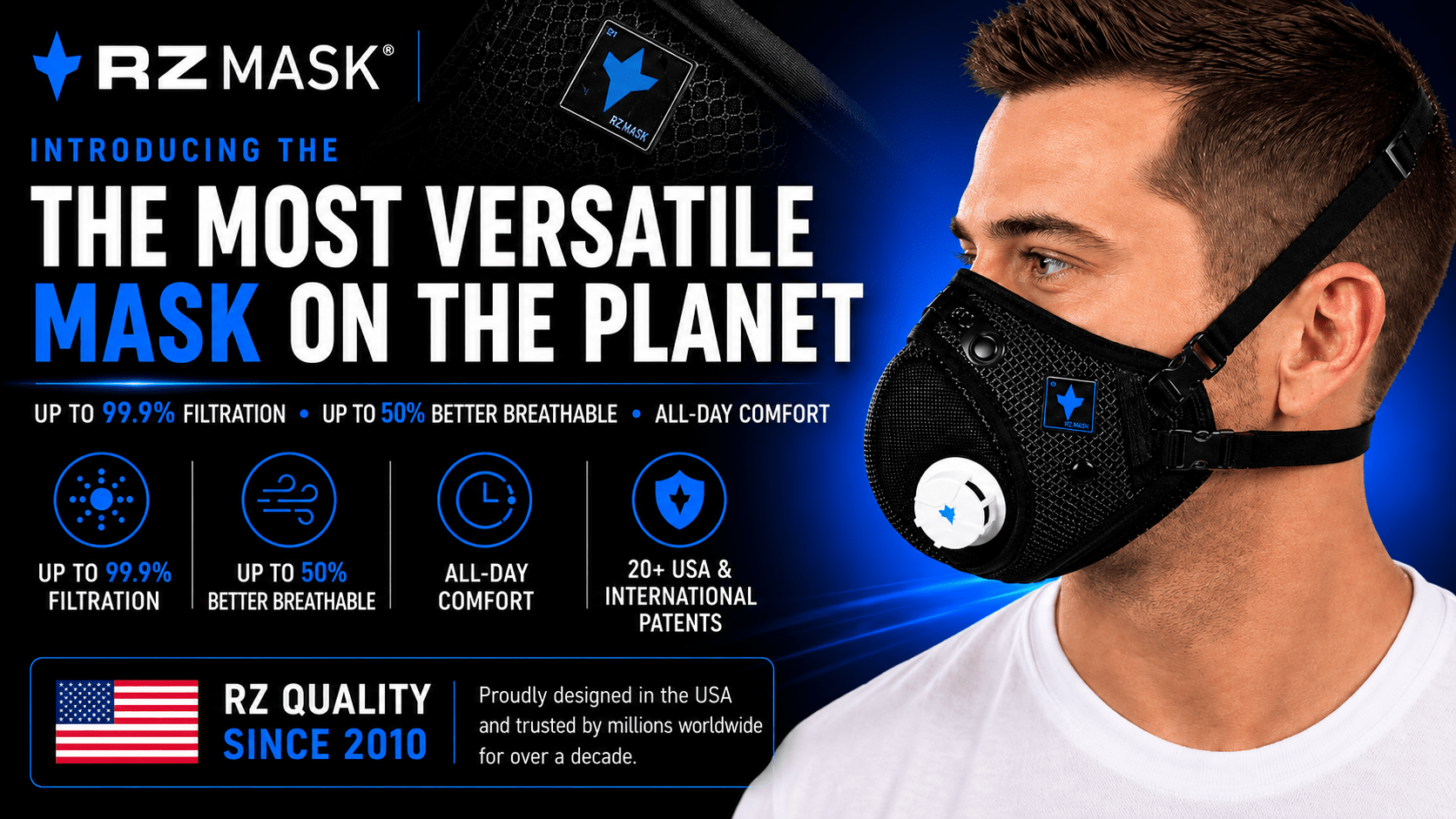
The RZM3 premium reusable mask is designed to deliver all four. Its F1 and F3 Active Carbon Filters capture particles down to 0.1 micron with an active carbon layer for finishing odors. The adjustable nose clip and 360° perimeter seal create a complete barrier against fine particles. The patented three-strap system maintains a secure fit through bending, lifting, and active shop work. And dual one-way discharge valves actively exhaust heat and moisture with every exhale — keeping the mask comfortable enough to wear through a full day at the bench.
For woodworkers who prioritize maximum breathability during long sanding and routing sessions, the RZ Airflow breathable mask is engineered for high-airflow comfort during physically demanding work.
For professional woodshops and manufacturing environments where certified respiratory protection is required, the RZ Pro FFP2 certified respirator and RZ Pro FFP3 certified respirator provide certified protection for compliance-driven environments.
Frequently Asked Questions: Woodshop Dust Health Risks
How serious is wood dust exposure for hobbyist woodworkers?
Hobbyist woodworkers face lower total exposure than full-time professionals — but the cumulative nature of fine particulate exposure means that even weekend shop sessions add up over years. The respiratory sensitization risk from hardwood dust in particular is not limited to occupational exposure. Consistent protection during shop sessions is a smart long-term investment regardless of how often you work.
Is MDF dust really more dangerous than solid wood dust?
MDF dust presents a compound challenge: it contains both wood fiber and adhesive resins, and it's generated at extremely fine particle sizes during cutting and routing. For woodworkers who work with MDF regularly, it's one of the higher-priority dust types to protect against. The RZM3 with F3 Active Carbon Filter is designed for exactly this application.
Can I use a paper mask for occasional woodworking?
Paper masks provide limited protection against fine wood dust — they don't seal against the face and aren't designed for fine particle filtration. For occasional, short-duration tasks generating only coarse dust, a paper mask is better than nothing. For any sanding, routing, or MDF work, a properly fitted mask with real filtration is the right tool.
Does the RZM3 protect against finishing fumes?
The RZM3's F1 and F3 Active Carbon Filters include active carbon designed to help reduce organic odors from wood finishing products — stains, lacquers, polyurethane, and oil finishes. Always ensure adequate ventilation in addition to wearing your mask during finishing operations. RZ Mask products are designed for general particulate filtration and organic odor reduction — not for protection against regulated chemical hazards at occupational exposure levels.
How do I know if my current mask is actually sealing?
A simple check: cup your hands over the mask and exhale sharply. If you feel air escaping around the edges — especially at the nose bridge or cheeks — your mask is not sealing. Unfiltered air enters through the same gaps on inhale. A properly fitted RZM3 with the nose clip shaped to your nose profile should direct all exhaled air through the discharge valves, not around the mask edges.
Start Protecting Your Lungs Today.
The damage from woodshop dust exposure is cumulative and largely invisible until it isn't. The woodworkers who take respiratory protection seriously early in their careers are the ones who are still working comfortably decades later. The RZM3 breathable reusable mask is designed to make proper protection practical — comfortable enough to wear all day, effective enough to actually matter.
Explore the full RZ Mask lineup: the RZM3 premium reusable mask, the RZ Airflow comfort-focused mask, the RZ Pro FFP2 certified respirator, and the RZ Pro FFP3 certified respirator.
For wood dust exposure guidelines, visit OSHA Wood Dust and CDC/NIOSH Wood Dust. RZ Mask products are designed for general particulate filtration and organic odor reduction — not for regulated hazardous substance protection. Consult your safety officer for workplace-specific PPE requirements.







Fall Allergy Protection: Best Masks for Ragweed, Pollen and Outdoor Allergens
5 Woodworking Project Ideas for Beginners