
Wellness does not stop when the workout ends.
You log your miles along the Hudson River Greenway. You show up for your Pilates class in Williamsburg three times a week. You have a Peloton in the corner of your Jersey City condo and a yoga mat rolled out in your Hoboken studio. You track your macros, drink your water, and take your recovery seriously.
But when the workout ends and you come home to your high-rise apartment, what is the air your lungs are recovering in?
According to the U.S. Environmental Protection Agency, Americans spend about 90% of their time indoors — and some indoor air pollutant levels can be 2 to 5 times higher than typical outdoor levels. For active adults in NYC and NJ condos and high-rises, that is worth thinking about.
Why Active Adults in NYC and NJ Should Think About Indoor Air
Does indoor air quality affect workout recovery?
Your lungs work hard during exercise. After a run through Prospect Park, a spin class in Fort Lee, or a yoga session in Astoria, your respiratory system is in an elevated state — breathing deeper, processing more air per minute than at rest.
The EPA's Inside Story guide to indoor air quality notes that inadequate ventilation can increase indoor pollutant concentrations significantly. In a tightly built NYC or NJ high-rise condo, the air you breathe during your post-workout stretch and sleep may contain particles, odors, and VOCs that your PTAC unit is circulating without any filtration.
We are not making medical claims. But if you invest in your body every day, it is worth asking: what is the air quality in the space where your body recovers?
What Comes Home With You After an Active Day
What can affect indoor air in a condo after an active day?
- Morning run through Central Park, the Hoboken waterfront, or the Edgewater boardwalk — shoes and clothing bring outdoor particles, pollen, and street dust back into your apartment
- Gym session in Weehawken, Fort Lee, or Montclair — you come home and settle in for recovery
- Peloton or yoga at home — activity stirs up settled dust, pet dander, and particles already in your apartment air
- Post-workout cooking — a high-heat protein meal releases cooking particles and odors into a closed apartment
- Evening wind-down — you are breathing the accumulated air of everything that happened in your apartment that day
The EPA identifies dust, pet dander, cooking particles, VOCs from cleaning products, and outdoor particulate matter tracked indoors as primary indoor air quality concerns.
What Is RZ Airflow — and Why Does It Matter for Active Adults?
What is the best PTAC filter for an active adult in a NYC or NJ high-rise?
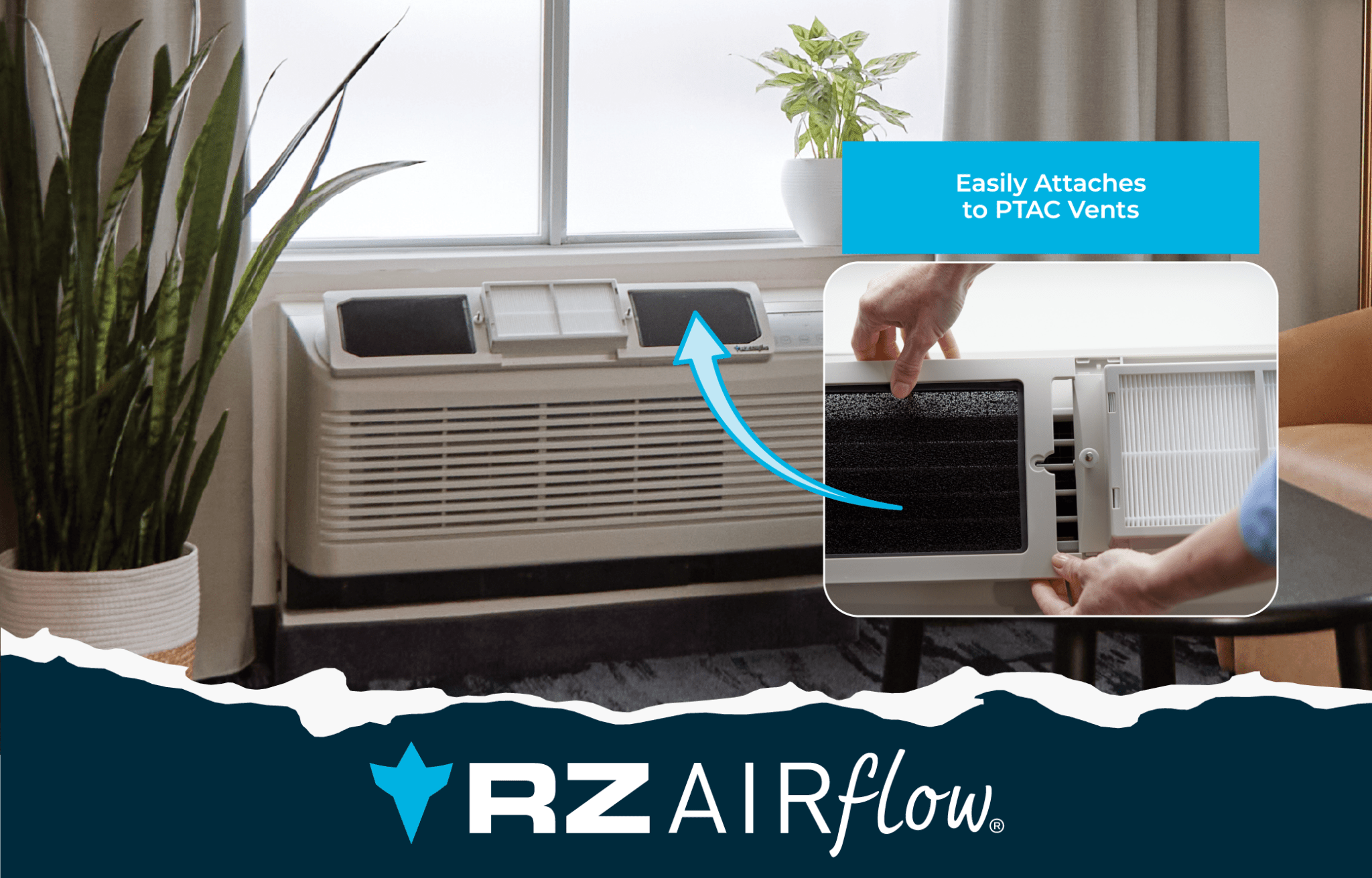
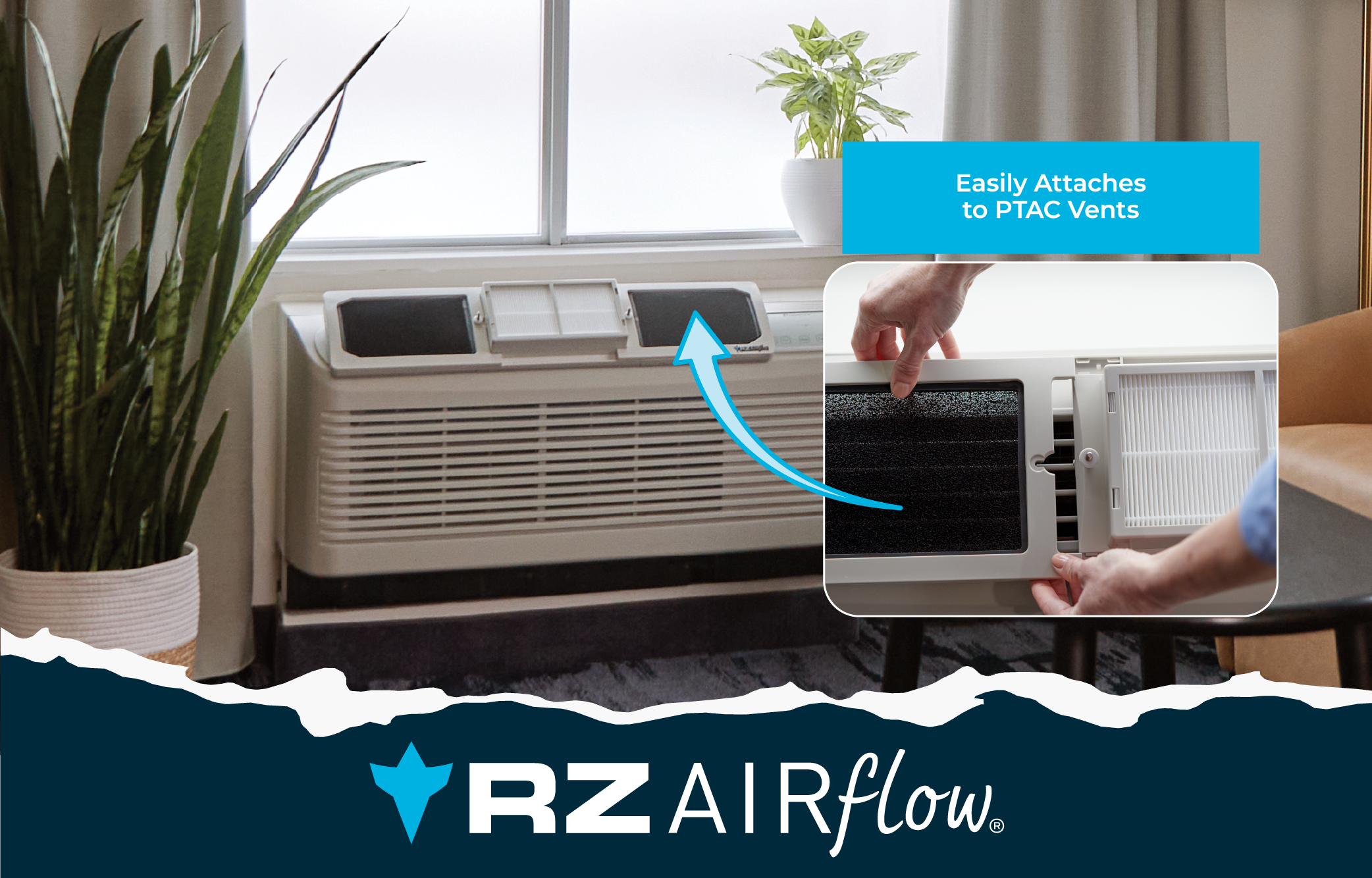
Most apartments and condos in New York and New Jersey are equipped with PTAC units — the wall-mounted Packaged Terminal Air Conditioners that heat and cool your space. Standard PTAC units circulate air without meaningful filtration.
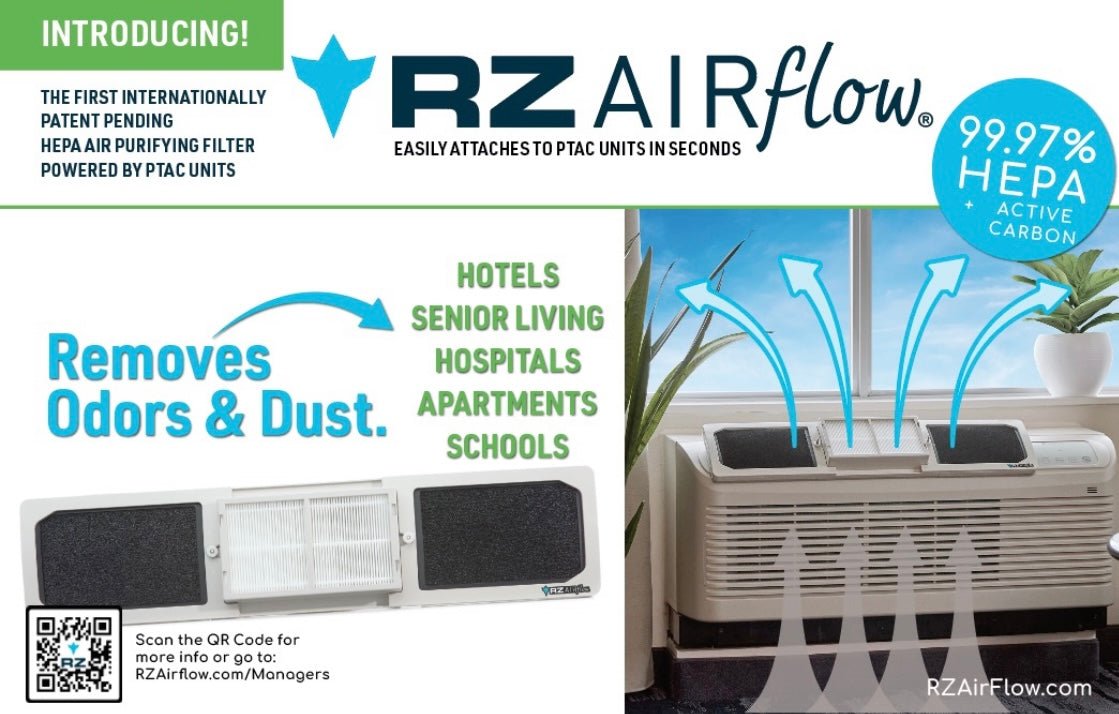
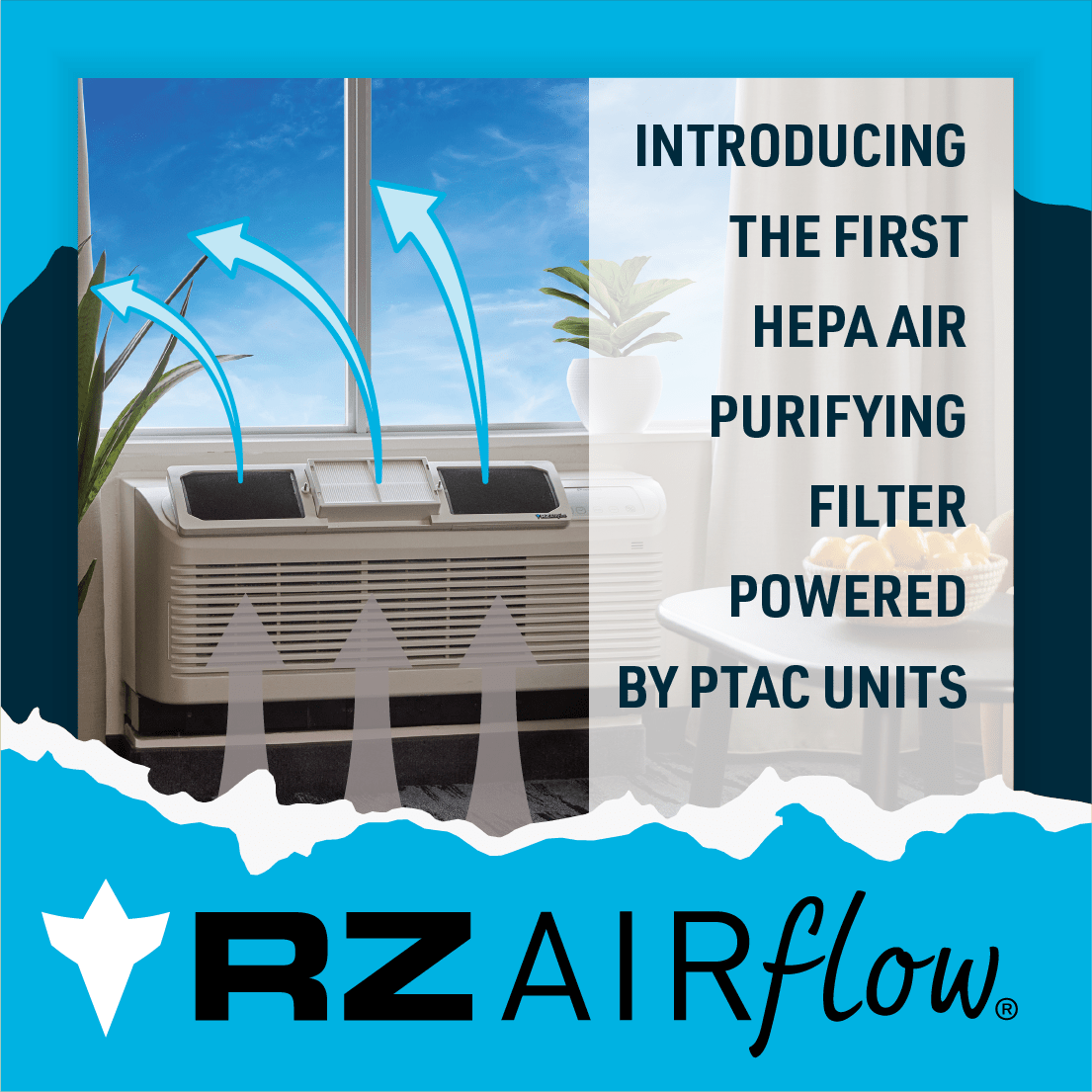
RZ Airflow installs directly into your existing PTAC unit, adding:
- True HEPA filtration — designed to help capture fine airborne particles including dust, pollen, and pet dander
- Active carbon filtration — designed to help reduce odors including cooking smells, cannabis odors from neighboring units, pet odors, and VOCs
No extra plug. No floor space. No added noise. Compatible with GE, Friedrich, Amana, LG, Islandaire, Carrier, Daikin, and all major PTAC brands. RZ Airflow is not a medical device and does not claim to cure, treat, or prevent any medical condition.
The 3-Month Filter Routine
How often should I replace RZ Airflow filters?
Replace HEPA and active carbon filters every 3 months for optimum performance — especially in active NYC and NJ households with pets, daily cooking, cannabis odors, heavy pollen seasons, or heavy PTAC use. Shop replacement filters at rzairflow.com.
You Take Care of Your Body. Now Take Care of the Air at Home.
You take care of your body every day. Now take care of the air your lungs breathe at home.
Shop RZ Airflow → Replace Your Filters →
Live in a Multi-Unit Building?
Talk to your property manager, condo board, co-op board, or building manager about RZ Airflow multi-unit discounts and full-building custom quotes.
Request a Full-Building Quote →
Frequently Asked Questions
Does indoor air quality affect athletic recovery?
We do not make medical claims. The EPA documents that indoor air can contain particles, VOCs, and odors at elevated concentrations in tightly built spaces. People with respiratory health concerns should follow the guidance of their healthcare provider.
What is the best PTAC filter for an active adult in a NYC or NJ condo?
RZ Airflow installs directly into your existing PTAC unit and adds True HEPA and active carbon filtration — no extra plug, no floor space, no added noise. Visit rzairflow.com.
How often should I replace RZ Airflow filters?
Every 3 months for optimum performance — sooner if you have pets, cook daily, deal with cannabis odors, or live through heavy pollen or smoke seasons.



Women Are Changing ATV & UTV Safety — And Dust Protection Should Be Next