
What Is the Best Mask for Woodworking? The Complete Guide to Wood Dust Respiratory Protection
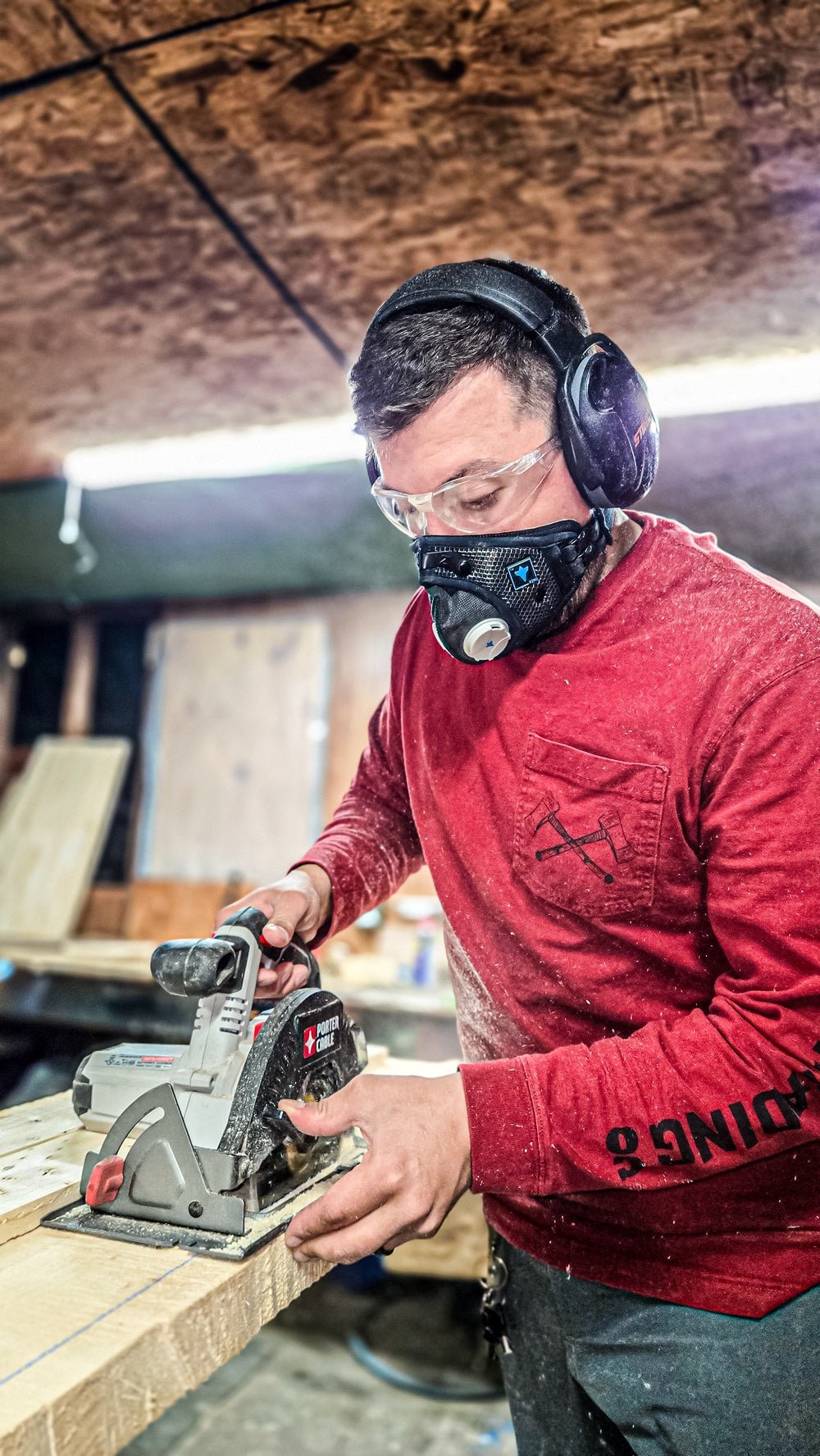
If you spend time in a woodshop — whether you're a professional cabinetmaker, a weekend hobbyist, or a furniture builder — wood dust is one of the most significant respiratory hazards you face every day. The question isn't whether you need a mask. The question is: which mask actually protects you?
This guide answers that question with specificity. We'll cover what wood dust does to your respiratory system, what filtration standards matter, what fit and breathability requirements a woodworking mask must meet, and which RZ Mask products are the right choice for different woodshop environments.
Why Wood Dust Is a Serious Respiratory Hazard
Wood dust is not just an annoyance. It is a recognized occupational health concern. Here's what matters for woodworkers:
- Fine wood dust particles (under 10 microns) penetrate deep into the respiratory system and are difficult to expel naturally
- Hardwood dust (oak, walnut, cherry, maple) is associated with respiratory sensitization and long-term lung health concerns with repeated, unprotected exposure
- Softwood dust (pine, cedar, spruce) can cause respiratory irritation and sensitization over time
- MDF and plywood dust contains adhesive resins in addition to wood fiber — making filtration especially important during cutting and sanding
- Finishing products — lacquers, stains, polyurethane, and oil finishes — release organic odors and VOCs that benefit from active carbon filtration
Note: For specific hazardous substances including silica, asbestos, or classified carcinogens, consult your safety officer and applicable regulations for appropriate certified PPE requirements. RZ Mask products are designed for general dust, pollen, smoke, and organic odor protection.
What Filtration Standard Does a Woodworking Mask Need?
The most important specification on any woodworking mask is its filtration efficiency — specifically, what percentage of airborne particles it captures and at what particle size.
- 99.9% filtration down to 0.1 microns — the standard delivered by RZ Mask F1 and F3 Active Carbon Filters. This captures fine wood dust, MDF particles, sanding dust, and finishing mist at the particle sizes that matter most.
- Active carbon layer — beneficial for woodshops where finishes, stains, and adhesives are used. The active carbon element helps neutralize organic odors from wood finishing products, stains, and lacquers — making your shop environment more comfortable during finishing work.
- Disposable vs reusable masks — Disposable paper-style masks filter large particles only and provide no seal against fine dust. For woodworkers who spend regular time in the shop, a reusable mask with 99.9% filtration and a complete perimeter seal is both more protective and more cost-effective.
The Best RZ Mask for Woodworking: A Use-Case Guide
For Most Woodworkers: RZM3 with F3 Active Carbon Filter
The RZM3 is the best woodworking mask for the majority of shop users. Here's why:
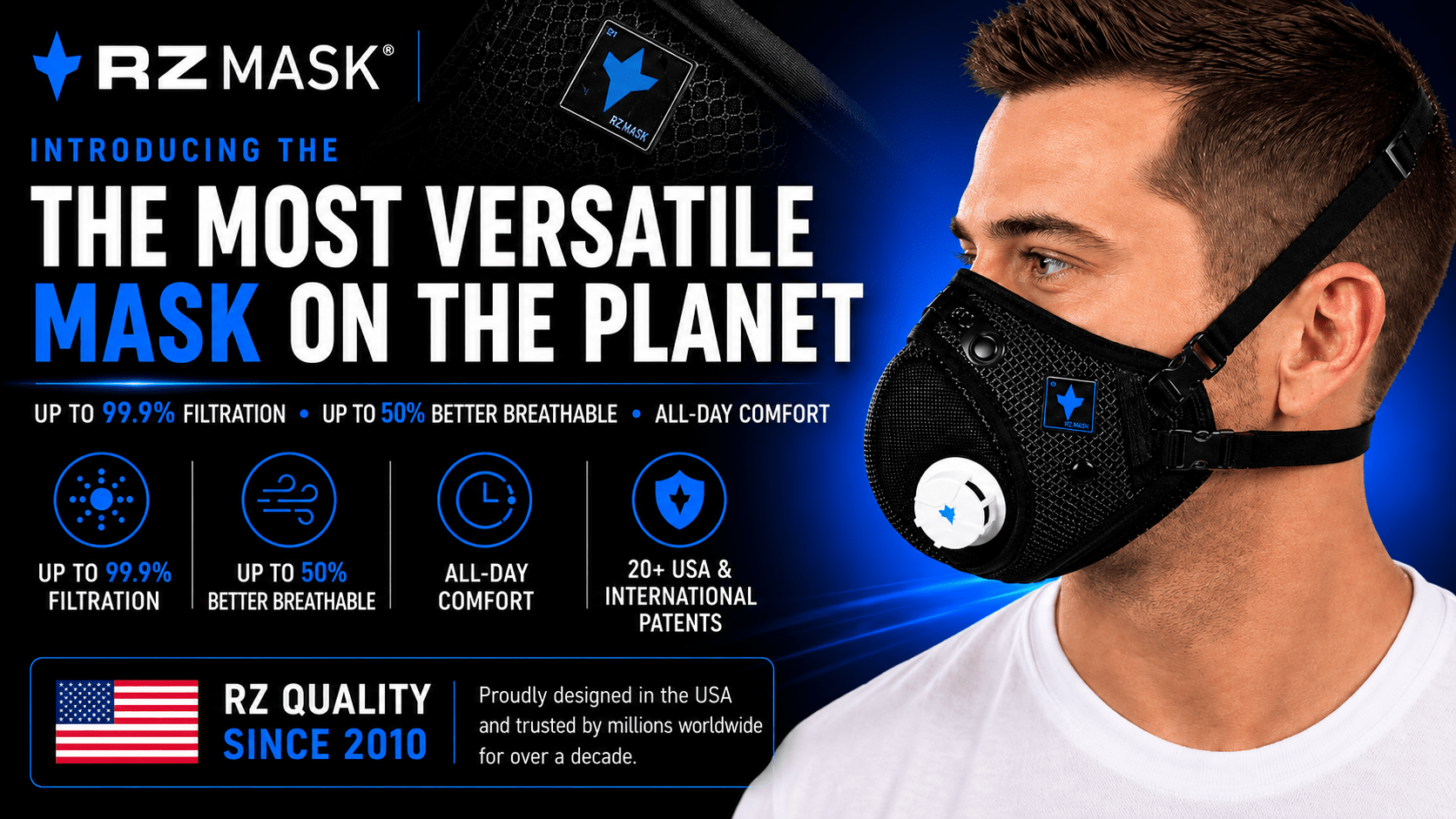
- F3 High Flow filters deliver 99.9% filtration + active carbon odor control + up to 50% better breathability than standard F1 filters — critical for extended shop sessions where breathing resistance causes fatigue
- Patented 3-in-1 strap system converts between neck loop (bench work), head strap (power tool use), and ear loop (quick tasks) — one mask adapts to every woodshop scenario
- RZ Secure 360° Seal eliminates gap leakage — fine wood dust enters through gaps, not just through the filter material
- Fog-free adjustable nose clip — keeps safety glasses clear during sanding, routing, and finishing
- Dual discharge valves — actively exhaust heat and moisture, keeping you comfortable through long sessions at the bench or table saw
- 19+ patents — the most patented reusable mask in its class
For Cold-Weather or Unheated Shops: RZ M1 Neoprene
If your shop is unheated or you work in cooler temperatures, the RZ M1 Neoprene adds warmth to the same 99.9% filtration and active carbon odor control. The neoprene shell retains heat without sacrificing filtration performance — the original RZ Mask design since 2010.
For Regulated Professional Environments: RZ PRO FFP2
If you work in a professional woodshop subject to workplace safety regulations, the RZ PRO FFP2 provides CE certified protection to European standard EN 149 — independently tested and verified at 94% filtration, suitable for environments up to 10x the Workplace Exposure Limit (WEL). Always consult your safety officer to confirm the appropriate PPE specification for your specific workplace hazards.
The Most Common Woodworking Mask Mistakes
- Using a paper dust mask — Paper masks filter large particles only and provide no seal against fine dust. They are not adequate for regular woodshop use.
- Wearing a mask that doesn't seal — Fine wood dust is small enough to enter through any gap between the mask and your face. Fit and seal are as important as filtration rating.
- Not using active carbon for finishing work — If you apply stains, lacquers, or polyurethane without active carbon filtration, you are inhaling organic odors and VOCs that a standard particulate filter does not address.
- Not replacing filters regularly — A clogged filter increases breathing resistance and reduces filtration efficiency. Replace RZ Mask filters when breathing becomes noticeably harder.
- Removing the mask between tasks — Fine wood dust remains airborne for 30+ minutes after sanding or cutting stops. Keep your mask on until the air clears.
Frequently Asked Questions: Woodworking Masks
Is a paper dust mask good enough for woodworking?
No. Paper-style dust masks filter only large particles and do not create a complete seal against fine wood dust. For regular woodshop use, a reusable mask with 99.9% filtration and a full perimeter seal provides meaningfully better protection.
Do I need a mask for hand tool woodworking?
Yes. Hand planes, chisels, and hand saws generate fine dust that remains airborne for extended periods. Wearing a mask during and after hand tool work is good practice for long-term respiratory health.
What's the difference between F1 and F3 filters for woodworking?
Both F1 and F3 Active Carbon Filters deliver 99.9% filtration and active carbon odor control. The F3 High Flow filter adds up to 50% better breathability — making it the preferred choice for extended woodshop sessions where breathing resistance causes fatigue. For most woodworkers, the F3 is the right choice.
How often should I replace my woodworking mask filter?
Replace your RZ Mask filter when breathing resistance increases noticeably, when the filter becomes visibly soiled, or after extended use in high-dust environments. For active woodworkers, this typically means every 20–40 hours of shop time depending on dust levels.
Can I use an RZ Mask for finishing and staining?
Yes. The RZ Mask F1 and F3 Active Carbon Filters include an active carbon element that helps neutralize organic odors from wood finishing products including stains, lacquers, and oil finishes. For solvent-heavy finishing environments, ensure adequate ventilation in addition to wearing your mask.
The Bottom Line: What Is the Best Mask for Woodworking?
The best mask for woodworking is one that delivers 99.9% filtration of fine particles, includes an active carbon layer for organic odor control during finishing work, creates a complete seal with no gap leakage, and is comfortable enough to wear for the full duration of your shop session.
For the majority of woodworkers, that mask is the RZM3 with F3 Active Carbon Filters — the most patented reusable mask in its class, built by RZ Mask, the company that has been engineering precision respiratory protection since 2011 with 3+ million masks sold worldwide.
Always consult applicable workplace safety regulations and your safety officer for specific hazardous substance requirements. RZ Mask products are designed for general dust, pollen, smoke, and organic odor protection.









Customer Spotlight: County Line Hardwood
Why Your Mask Fogs Your Safety Glasses — And How to Stop It for Good