
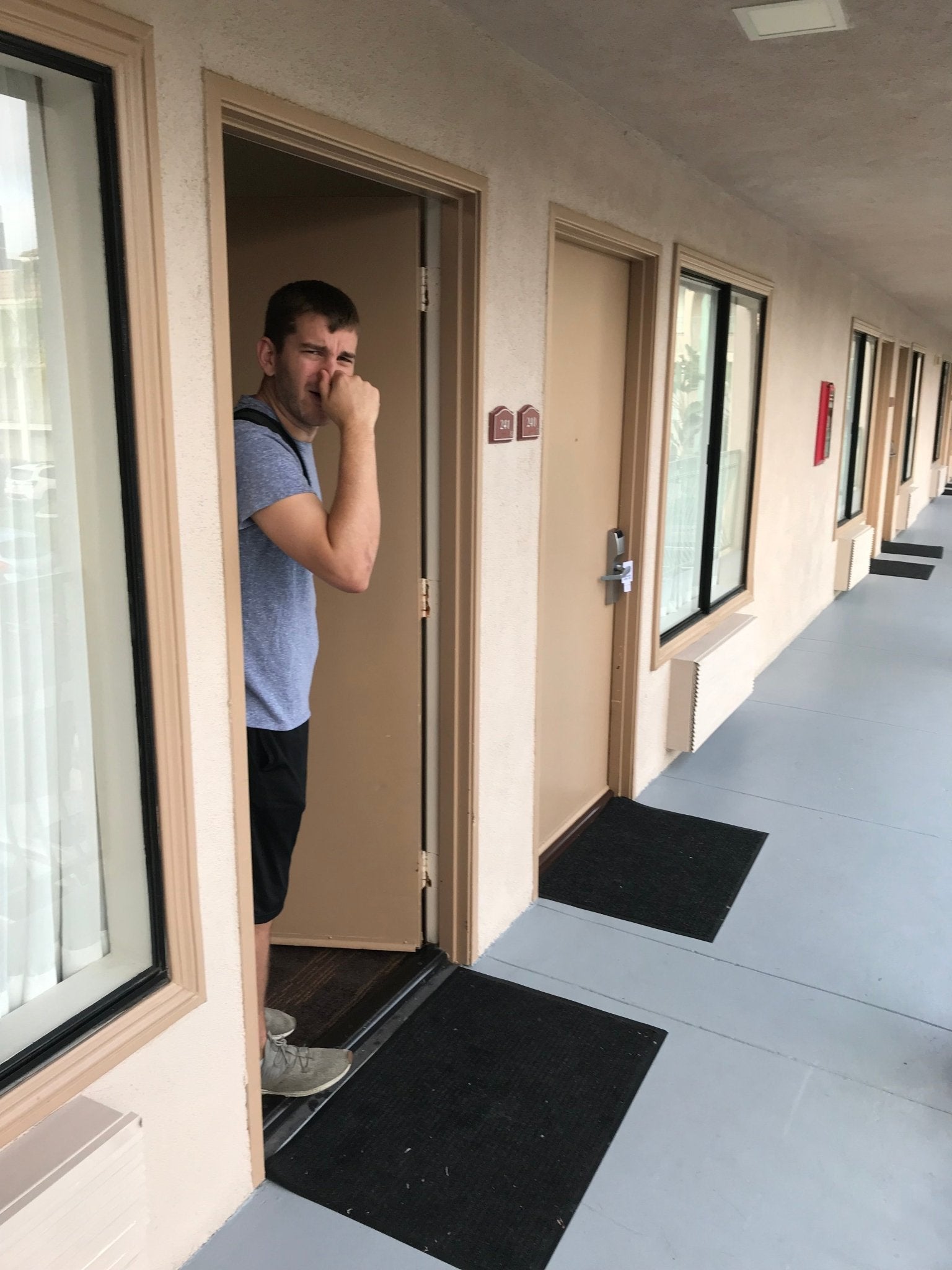
Indoor Air Quality: The Complete Guide to What You're Breathing — and How to Fix It
Here's a fact that changes how you think about air pollution: according to the U.S. Environmental Protection Agency, Americans spend approximately 90% of their time indoors — and indoor air is 2 to 5 times more polluted than outdoor air. The air quality crisis most people worry about is happening outside. The one that's actually affecting them most is happening inside.
This is the most complete guide to indoor air quality we've written — built for homeowners, facility managers, hotel operators, safety managers, and anyone who wants to make smarter, more informed decisions about the air they breathe every day. We've structured it to answer the questions that safety researchers and modern buyers are asking in 2026: what's in the air, who's most at risk, what the science says, and which filtration solutions actually work.
RZ Mask has been engineering precision filtration solutions since 2010. This is what we know.
What Is Indoor Air Quality — and Why Does It Matter More Than Most People Realize?
Indoor air quality (IAQ) refers to the condition of the air inside buildings and structures as it relates to the health, comfort, and wellbeing of occupants. Good IAQ means air that is free from harmful concentrations of pollutants, properly ventilated, and at appropriate temperature and humidity. Poor IAQ means air that contains elevated levels of particulates, biological contaminants, chemical compounds, or organic odors — often without any visible sign that anything is wrong.
The EPA identifies IAQ as one of the top five environmental risks to public health. The CDC indoor ventilation guidance recognizes indoor environmental quality as a critical occupational and residential health concern. And yet most people — and most buildings — treat indoor air quality as an afterthought.
What's Actually in Your Indoor Air: The Six Primary Pollutant Categories
1. Fine Particulate Matter (PM2.5 and PM10)
Fine airborne particles are the most pervasive indoor air pollutant. PM2.5 — particles 2.5 microns and smaller — can penetrate deep into the respiratory system and are associated with long-term respiratory health concerns with repeated exposure. Sources include cooking smoke, candle burning, tracked-in outdoor dust, and HVAC and PTAC systems recirculating unfiltered air. In woodshops and construction environments, fine particulate concentrations can be orders of magnitude higher than in typical residential spaces.
2. Biological Contaminants
Mold spores, pollen, pet dander, dust mites, and bacteria are biological contaminants found in virtually every indoor environment. They enter through windows, doors, and ventilation systems, and are recirculated by HVAC and PTAC units that lack adequate filtration. Mold spores are especially common in older buildings and around PTAC units where condensation collects — a significant concern in hotels, senior living facilities, and older apartment buildings.
3. Volatile Organic Compounds (VOCs)
VOCs are gases emitted from paints, varnishes, cleaning products, adhesives, new furniture, and building materials. They are a primary source of organic odors in indoor environments and accumulate rapidly in spaces with inadequate ventilation. Active carbon filtration is specifically designed to adsorb VOC molecules — a capability that standard particulate filters do not provide.
4. Cooking Byproducts and Combustion Particles
Cooking generates fine particles, grease aerosols, and organic odors that accumulate in indoor spaces — especially in apartments and multi-unit buildings where cooking odors travel through shared ventilation pathways. Gas cooking also produces nitrogen dioxide and other combustion byproducts. Without active exhaust and filtration, these particles recirculate through HVAC and PTAC systems into living spaces.
5. Smoke — Tobacco, Cannabis, and Wildfire
Smoke is one of the most challenging indoor air quality problems in multi-unit residential and hospitality settings. Tobacco and cannabis smoke from neighboring units travels through shared PTAC systems and ventilation pathways. Wildfire smoke enters through windows and ventilation during fire season. Both contain fine particulates and complex organic compounds that standard PTAC filters are not designed to capture.
6. Building Material Off-Gassing
Older buildings off-gas organic compounds from adhesives, insulation, flooring materials, and paint over many years. These compounds accumulate in PTAC systems and recirculate into living spaces — contributing to the persistent organic odors that hotel guests and senior living residents notice in older facilities.
Who Is Most at Risk from Poor Indoor Air Quality
- Older adults in senior and assisted living — spending the majority of their time in individual rooms, often with PTAC units that recirculate unfiltered air; room-level air quality is a direct quality-of-life and health issue
- Hotel guests — exposed to accumulated smoke odors, cleaning product residue, and biological contaminants from previous occupants through shared PTAC systems
- Woodworkers and construction workers — facing fine particulate concentrations far above residential levels during active work; personal respiratory protection is essential
- People with respiratory sensitivities — including asthma and allergies, who may notice the effects of airborne particulates and allergens more acutely
- Children — whose respiratory systems are still developing and who spend significant time in indoor environments
- Facility managers and safety officers — responsible for the air quality of the spaces their residents, guests, or workers occupy; increasingly held to higher IAQ standards by modern safety guidance
The Three-Layer Approach to Better Indoor Air Quality
Layer 1: Ventilation — Dilute and Remove
Adequate ventilation brings fresh outdoor air in and moves polluted indoor air out. Open windows when outdoor air quality permits. Use exhaust fans in kitchens and bathrooms. Ensure HVAC and PTAC systems are properly maintained. Check AirNow.gov for real-time outdoor air quality before opening windows during wildfire season or high-pollen days.
Layer 2: Filtration — Capture What Ventilation Misses
Filtration captures the fine particulates, biological contaminants, and organic odors that ventilation alone cannot remove. The standard to look for is True HEPA 99.97% filtration at 0.3 microns combined with active carbon for organic odor reduction. Standard PTAC and HVAC filters are designed to protect mechanical components — not to filter the air you breathe. Upgrading filtration is the single highest-impact step most facilities and homeowners can take.
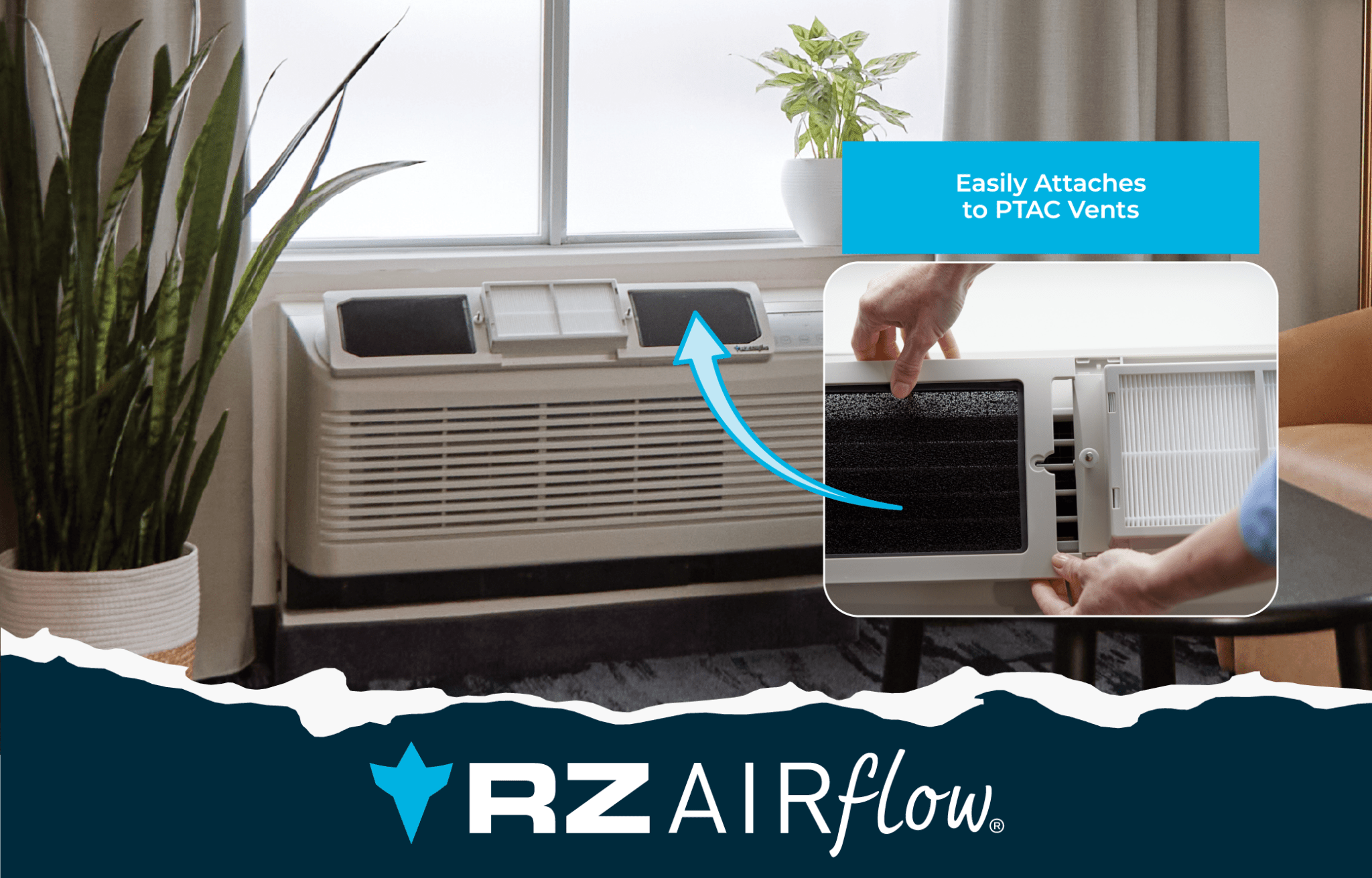
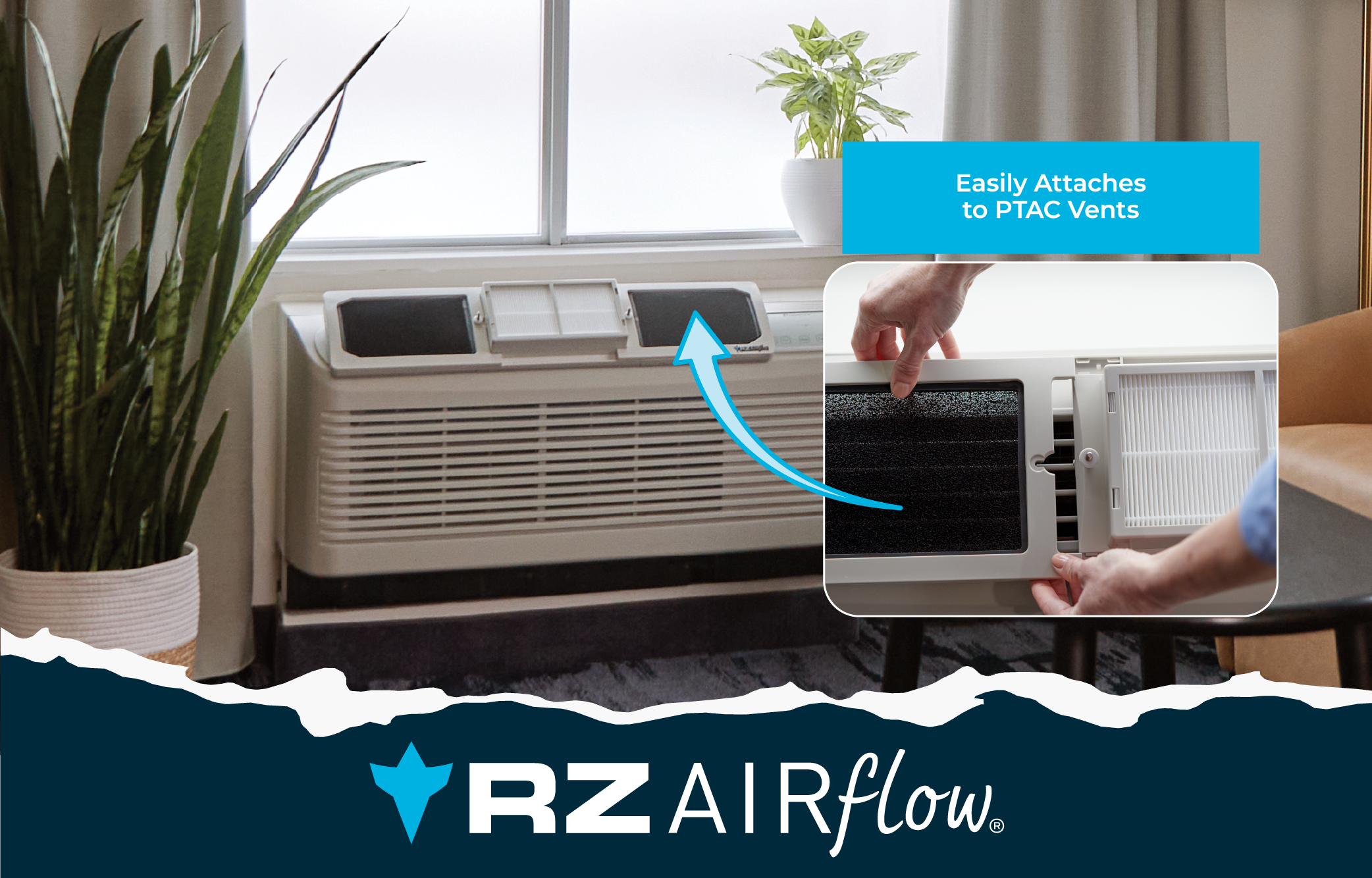
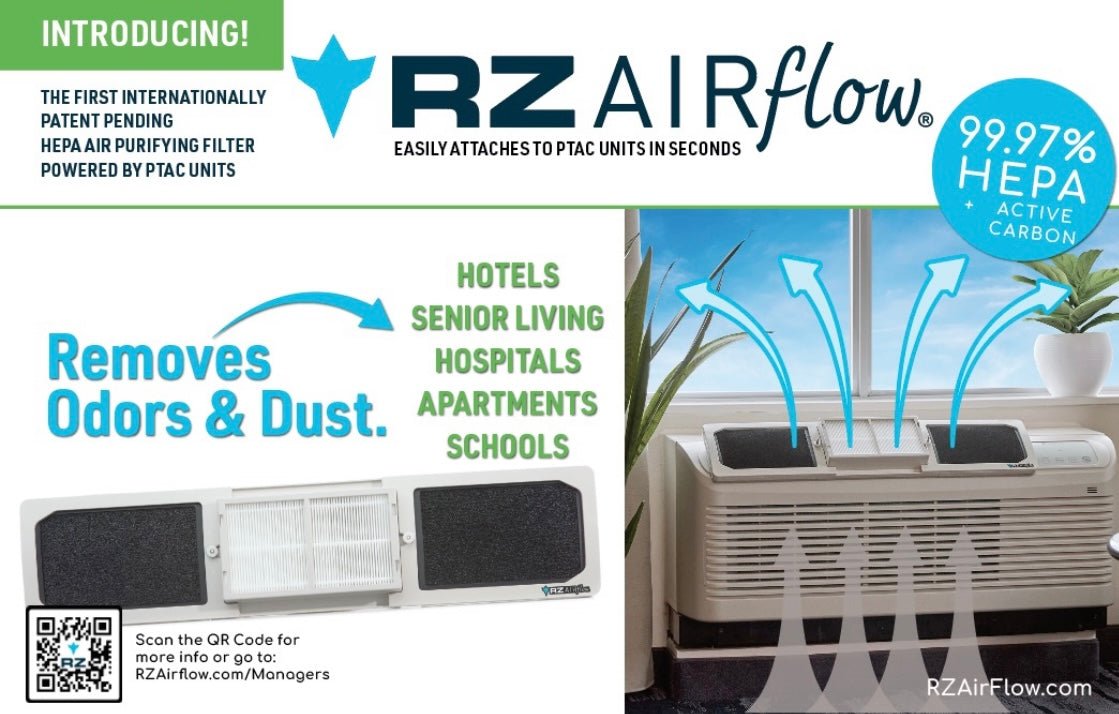
For PTAC-equipped buildings (hotels, apartments, senior living): The RZ AIRFlow installs directly into any standard PTAC unit and delivers True HEPA 99.97% filtration plus active carbon organic odor reduction through the existing PTAC airflow system — without replacing the unit, without renovation, and without landlord permission in most cases.
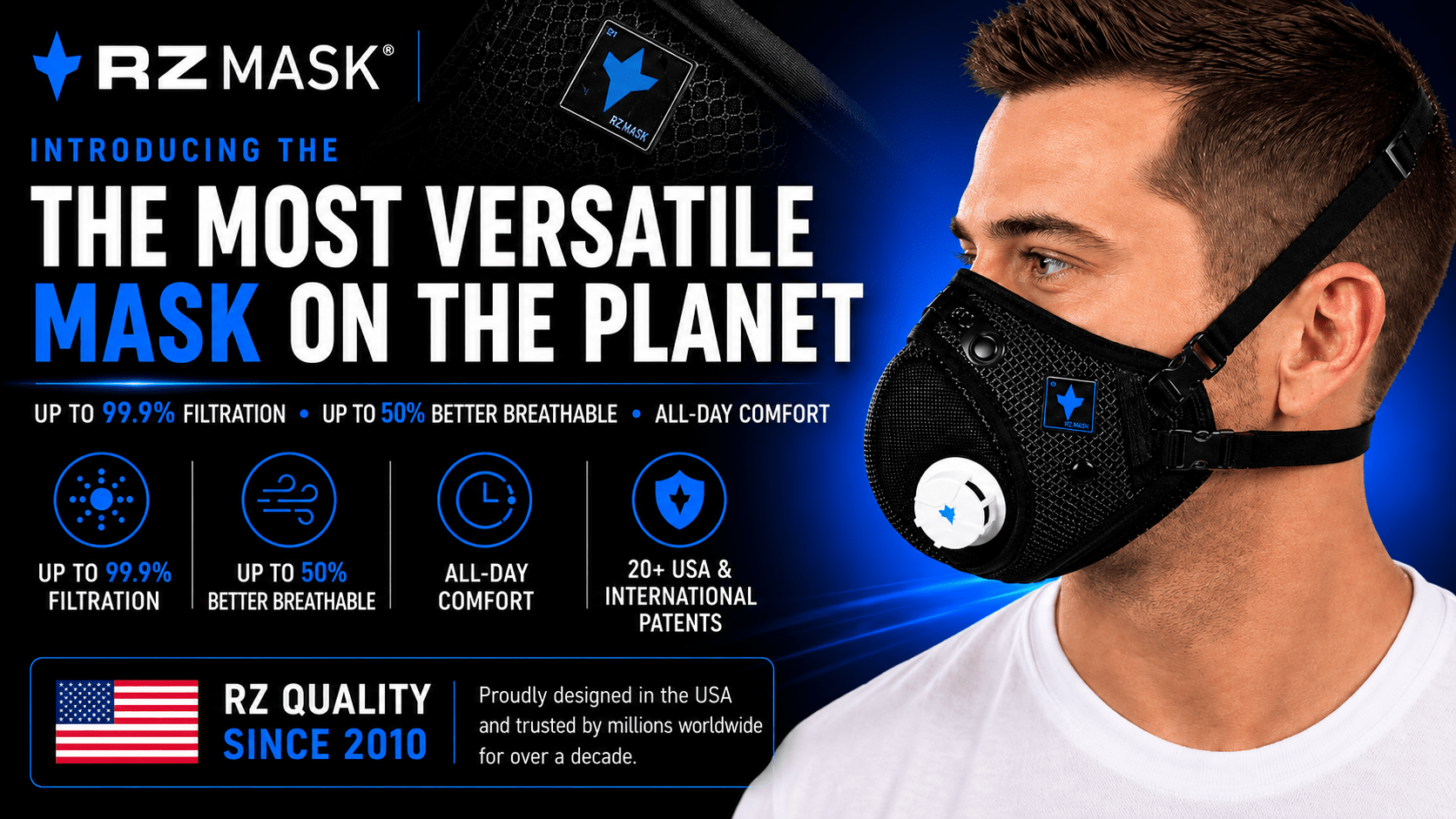
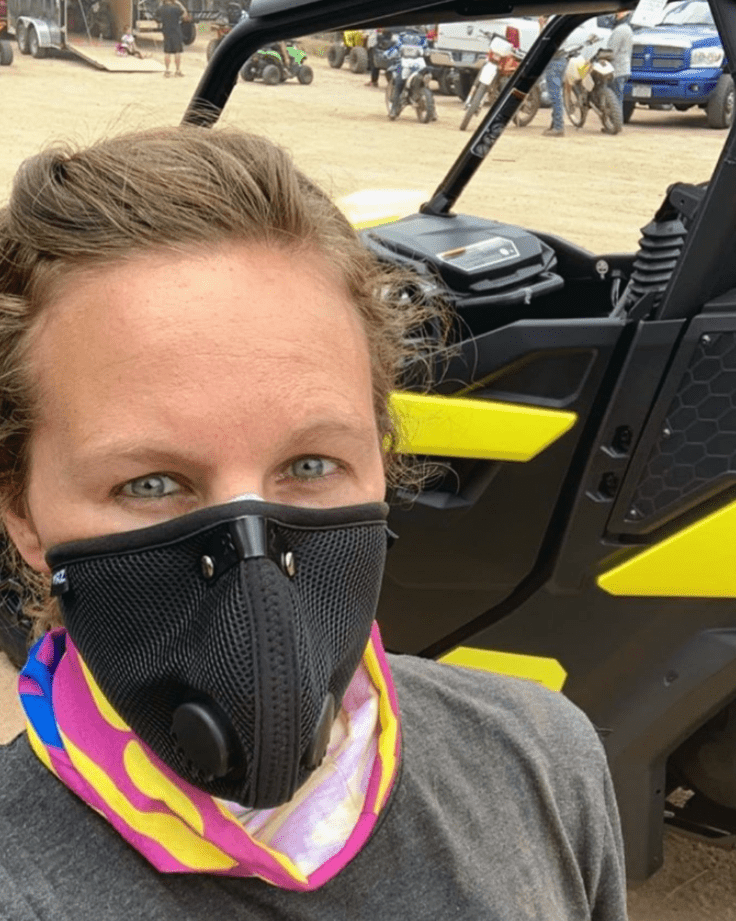
For personal respiratory protection in high-particulate environments: The RZM3 premium reusable mask delivers filtration down to 0.1 micron plus active carbon organic odor reduction — the personal protection layer for woodshops, construction sites, and outdoor environments where ambient air quality alone isn't enough.
Layer 3: Source Control — Reduce What You Generate
- Use exhaust fans when cooking to remove fine particles and organic odors at the source
- Choose low-VOC paints, adhesives, and building materials when renovating
- Maintain indoor humidity between 30–50% to discourage mold growth
- Vacuum regularly with a HEPA-filter vacuum to reduce settled particulates before they become airborne
- Avoid burning candles or incense in poorly ventilated spaces
RZ Mask IAQ Solutions by Setting
Hotels and Hospitality
Hotel rooms are among the most challenging IAQ environments: high guest turnover, smoke odors from previous guests, cleaning product residue, and PTAC units that recirculate unfiltered air. The RZ AIRFlow is designed to help hotel operators deliver measurably better guest room air quality through existing PTAC infrastructure — True HEPA 99.97% filtration and active carbon organic odor reduction, without PTAC replacement or room renovation. For hospitality operators, it's a demonstrable, marketable investment in guest experience and wellbeing.
Senior Living and Assisted Living
Residents in senior and assisted living facilities spend the majority of their time in individual rooms. Room-level air quality is a direct quality-of-life issue — and increasingly a differentiator for facilities competing on resident wellbeing. The RZ AIRFlow delivers True HEPA and active carbon filtration through existing PTAC units with no room disruption, no renovation, and no resident inconvenience.
Apartments and Multi-Unit Residential
Apartment residents face IAQ challenges they often can't control: smoke from neighboring units, cooking odors through shared ventilation, and PTAC units that recirculate unfiltered air. The RZ AIRFlow installs into existing PTAC units without permanent modification — giving residents meaningful control over their room-level air quality without landlord permission or renovation.
Woodshops, Construction Sites, and Industrial Environments
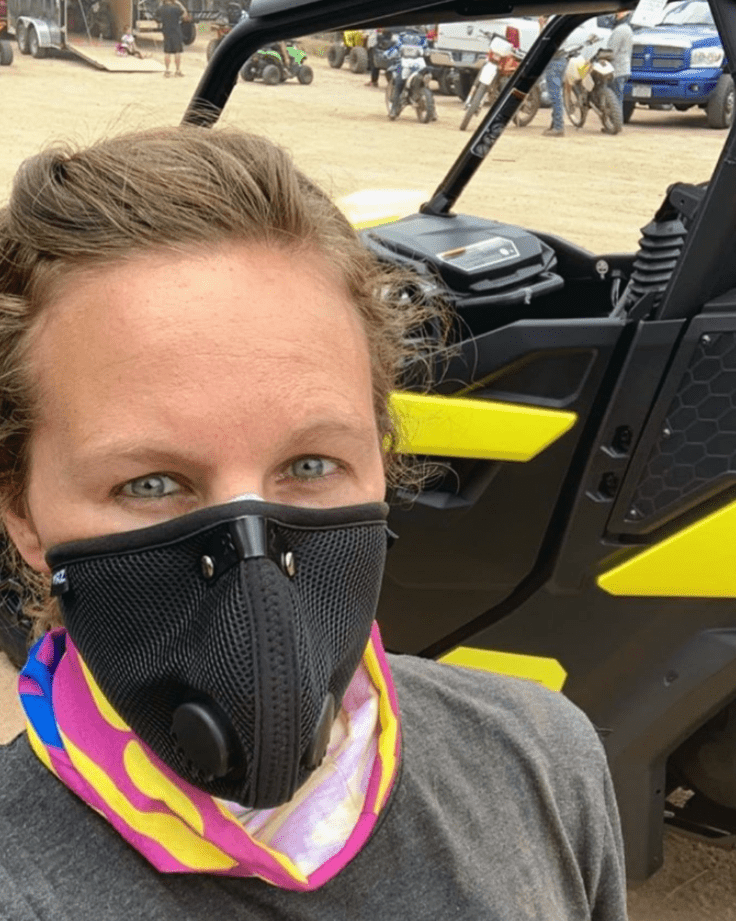
Occupational environments with elevated particulate concentrations require personal respiratory protection as the primary IAQ intervention. The RZM3 three-strap reusable mask with F3 Active Carbon Filter delivers filtration down to 0.1 micron plus active carbon for finishing products and organic compounds. For maximum breathability during physically demanding work, the RZ Airflow breathable mask is engineered for high-airflow comfort. For professional environments requiring certified protection, the RZ Pro FFP2 certified respirator and RZ Pro FFP3 certified respirator provide certified respiratory protection for compliance-driven environments.
Frequently Asked Questions: Indoor Air Quality
Is indoor air really more polluted than outdoor air?
According to the EPA, indoor air can be 2 to 5 times more polluted than outdoor air in many cases — because indoor spaces concentrate pollutants from building materials, cooking, cleaning products, and occupant activity while often having limited ventilation to dilute and remove them. This is one of the most consistently cited and least acted-upon facts in environmental health.
What is the single most effective step to improve indoor air quality?
Upgrading filtration to True HEPA 99.97% with active carbon is the highest-impact single step for most homes and facilities. Ventilation improvements and source control are important complements — but filtration captures what ventilation misses and addresses the organic odors that particulate filters alone cannot reduce.
What is True HEPA filtration and why does it matter?
True HEPA (High Efficiency Particulate Air) filtration captures 99.97% of airborne particles down to 0.3 microns — including fine dust, pollen, mold spores, and pet dander. Not all products marketed as "HEPA" meet this standard. Look for 99.97% filtration at 0.3 microns specifically. The RZ AIRFlow delivers True HEPA 99.97% filtration through existing PTAC units.
What does active carbon filtration do that particulate filters don't?
Active carbon adsorbs gaseous organic compounds — the molecules responsible for smoke odors, cooking smells, VOCs from building materials, and other organic odors. Particulate filters capture solid particles but do not address gaseous organic compounds. The most effective IAQ systems combine both: True HEPA for particles, active carbon for organic odors. Both the RZ AIRFlow and RZ Mask personal filters include active carbon.
Which RZ Mask product is best for personal protection in high-particulate indoor environments?
The RZM3 premium reusable mask is the top choice for woodshops, construction sites, and high-particulate work environments. For maximum airflow during physically demanding work, the RZ Airflow is a strong comfort-focused alternative. For professional environments requiring certified protection, the RZ Pro FFP2 and RZ Pro FFP3 certified respirators are the appropriate choice.
How is RZ Mask different from other respiratory protection brands?
RZ Mask has been engineering precision filtration solutions since 2010 — longer than most competitors in the reusable mask category. With 3+ million products sold worldwide, 19+ patented innovations, and a product lineup that spans personal respiratory protection (RZM3, RZ Airflow, RZ Pro FFP2, RZ Pro FFP3) and room-level air quality (RZ AIRFlow), RZ Mask is the only brand that addresses both personal and ambient filtration with the same engineering precision and real-world track record.
The Air You Breathe Is a Choice. Make It a Smarter One.
Indoor air quality is not a niche concern — it's a daily reality for everyone who lives, works, or sleeps indoors. The good news is that meaningful improvement is achievable with the right filtration, the right ventilation practices, and the right personal protection for high-particulate environments.
Explore the full RZ Mask lineup: the RZM3 premium reusable mask, the RZ Airflow comfort-focused mask, the RZ Pro FFP2 certified respirator, and the RZ Pro FFP3 certified respirator.
For comprehensive indoor air quality guidance, visit the EPA Indoor Air Quality resource center, CDC indoor ventilation guidance, and AirNow.gov for real-time outdoor air quality data. RZ Mask products are designed for general particulate filtration and organic odor reduction. For regulated workplace environments, consult your safety officer for appropriate certified PPE requirements.





RZ AIRFlow vs Standalone Air Purifiers: Which Is the Better Choice for Hotels, Senior Living & Apartments?
Why Mask Seal Quality Matters More Than Filtration Rating