
A beautiful apartment can still hold invisible air problems.
Your NYC or NJ apartment is your sanctuary. A well-designed space in Williamsburg, a sun-filled condo in Jersey City, a classic pre-war on the Upper West Side, a modern high-rise in Hoboken. You keep it clean. You keep it organized. You take pride in it.
But here is something worth knowing: a clean-looking apartment and a clean-air apartment are not always the same thing.
According to the U.S. Environmental Protection Agency, gases and particles from indoor sources are a primary indoor air quality concern — and in a NYC or NJ high-rise, those sources are active every single day.
What Can Linger in NYC and NJ Apartment Air?
Do apartments have indoor pollution from cooking, pets, cannabis, and dust?
Yes — and in a tightly built high-rise with limited natural ventilation, these sources can accumulate. Here is what is commonly present in NYC and NJ apartment air:
Cooking Odors and Particles
Daily cooking — especially high-heat cooking like searing, stir-frying, or roasting — releases airborne particles and odors that linger in a closed apartment. The EPA notes that cooking activities can contribute to indoor particulate matter. In a NYC apartment where the kitchen is steps from the living room and bedroom, cooking particles and odors have nowhere to go — except into the air your PTAC recirculates.
Cannabis Odors from Neighboring Units
Cannabis is legal in New York and New Jersey. In a building with dozens or hundreds of units, cannabis odors — and the particles that carry them — can migrate through shared ventilation pathways, hallways, and PTAC systems into your apartment. This is one of the most common indoor air complaints in NYC and NJ high-rises, and one of the hardest to control without active filtration.
Pet Dander
Dogs and cats shed dander continuously — microscopic particles of skin, hair, and saliva that become airborne and accumulate in apartment air. The EPA identifies pet dander as a primary indoor air quality concern.
Dust and Outdoor Particles
Every time you come home from a run through Central Park or a walk along the Edgewater waterfront, your shoes and clothing bring outdoor particles into your apartment. The EPA confirms that outdoor particulate matter is itself a source of indoor PM.
Cleaning Product VOCs
Common household cleaners release volatile organic compounds (VOCs) that can accumulate in a closed apartment. The EPA notes that organic pollutants can be 2 to 5 times higher indoors than outdoors.
Hallway and Building Odors
Shared corridors, trash rooms, laundry areas, and neighboring units all contribute odors and particles that enter your apartment through gaps around doors and shared PTAC ventilation pathways.
Smoke
Whether from outdoor sources, nearby restaurants, or neighboring units, smoke particles can infiltrate indoor spaces. Summer wildfire smoke events — increasingly common in the NYC and NJ metro area — can push outdoor particulate matter indoors through PTAC airflow.
What Helps: Active Carbon + HEPA PTAC Filtration
What filter works with PTAC units to reduce cooking smells, cannabis odors, pet dander, and dust?
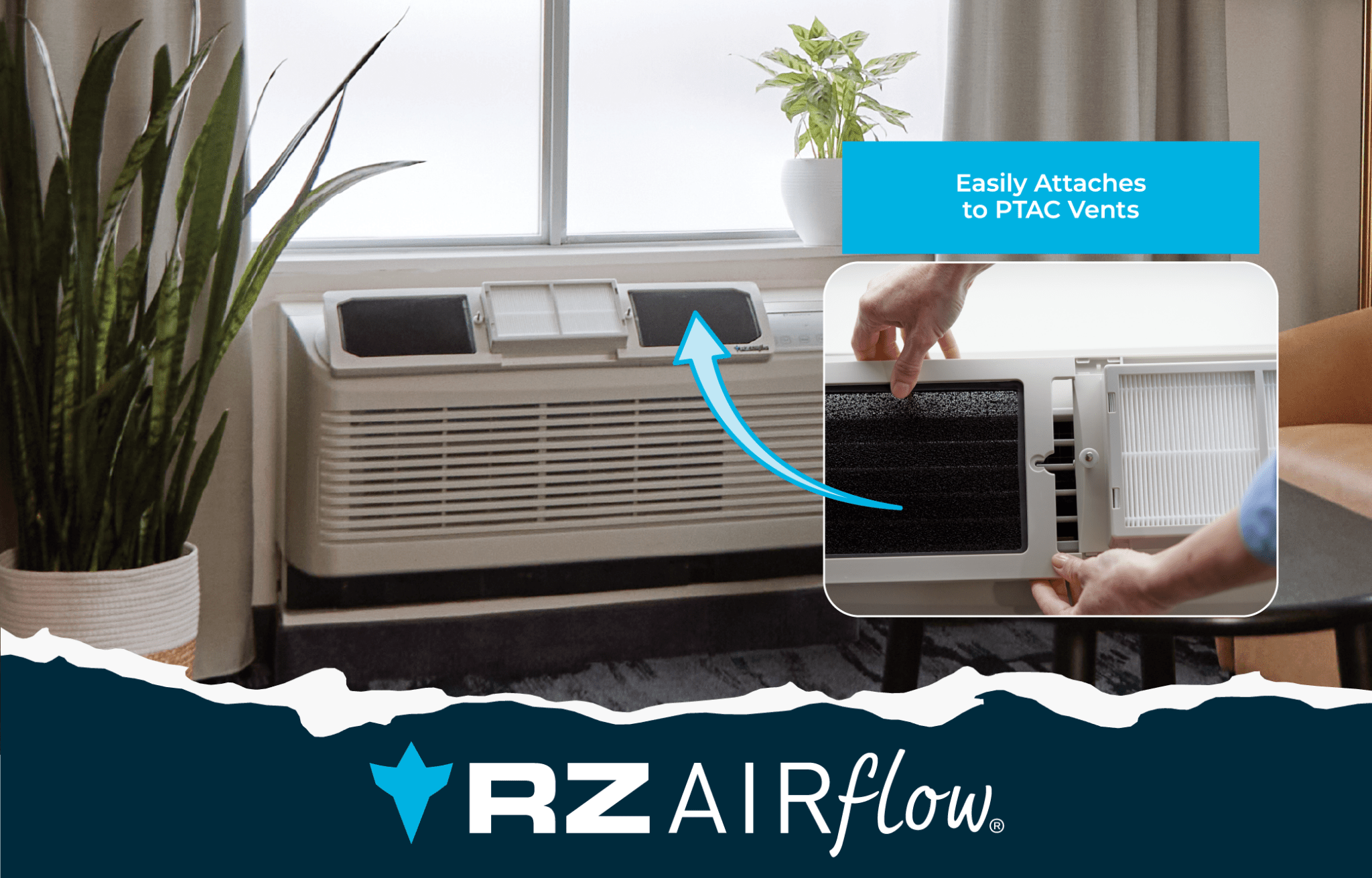
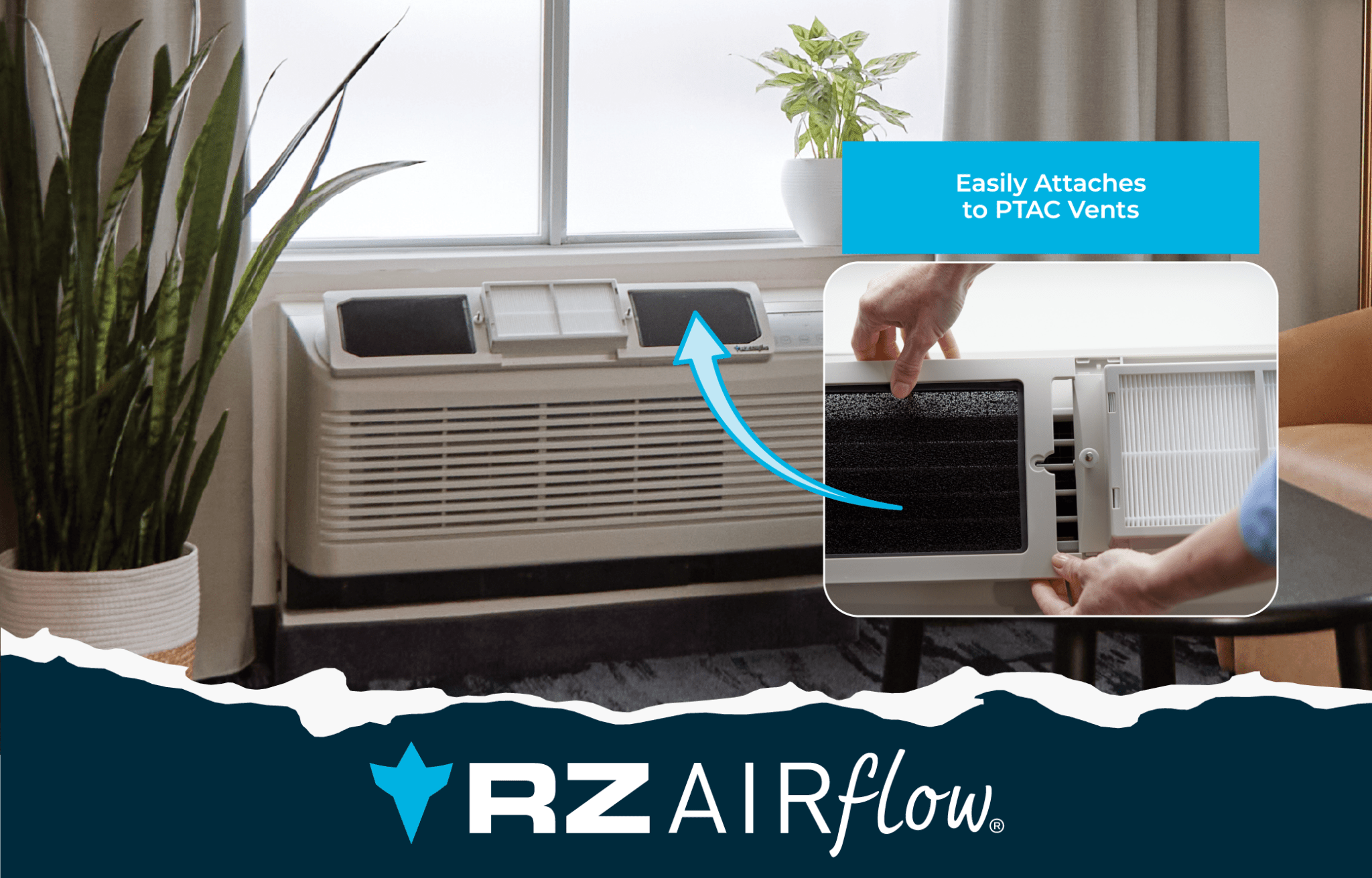
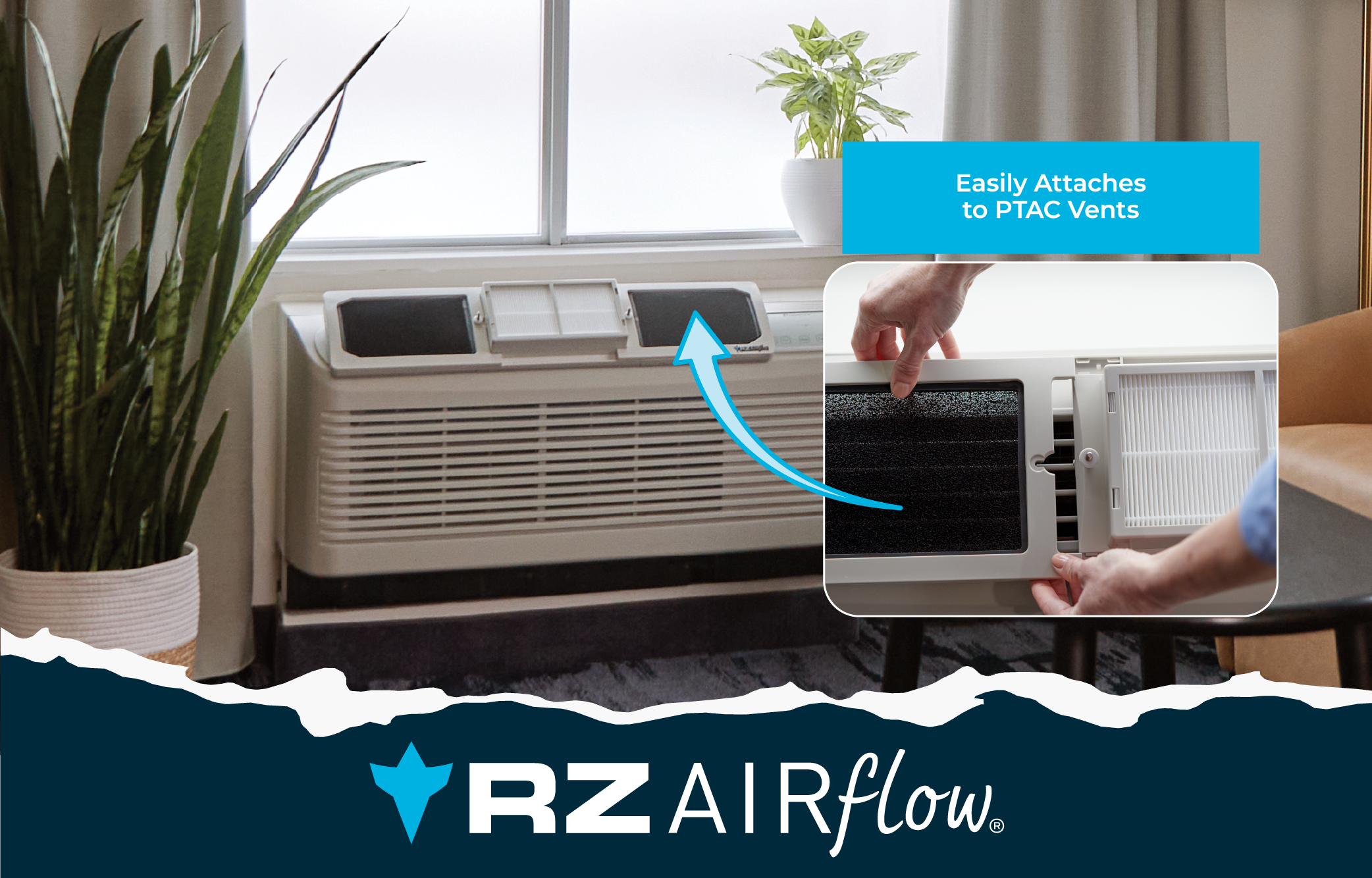
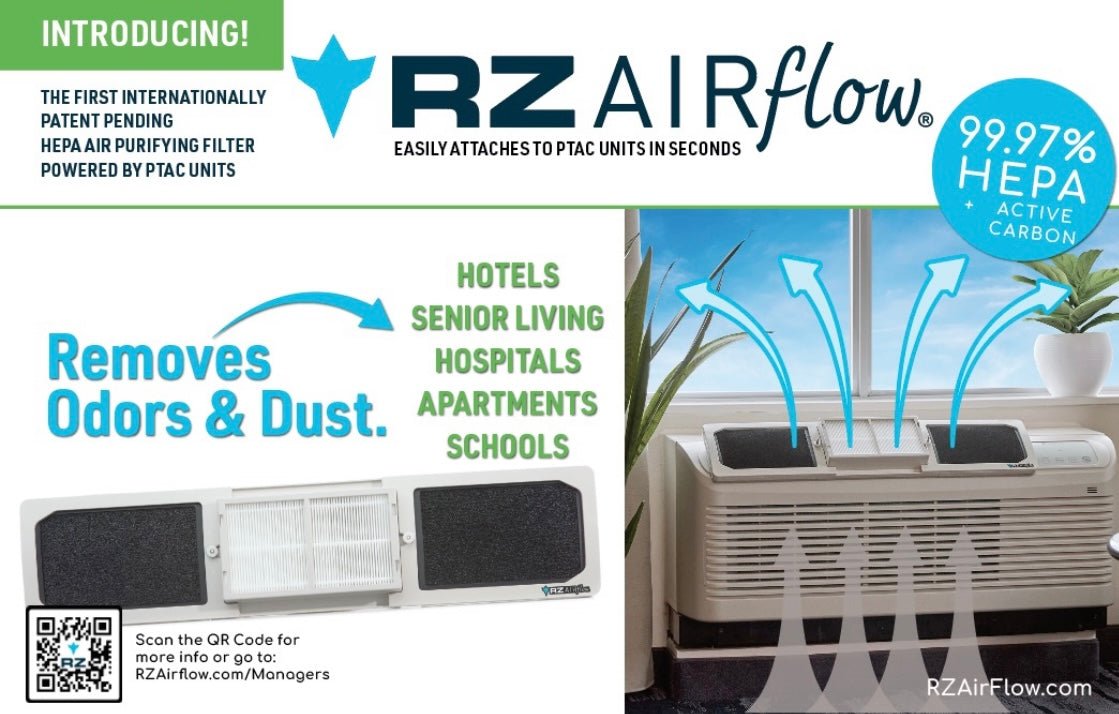
RZ Airflow installs directly into your existing PTAC unit, adding True HEPA filtration to help capture fine airborne particles, and active carbon filtration to help reduce odors including cooking smells, cannabis odors, pet odors, and VOCs. No extra plug. No floor space. No added noise. Compatible with all major PTAC brands.
RZ Airflow is not a medical device and does not claim to cure, treat, or prevent any medical condition.
Replace Filters Every 3 Months
For optimum performance, replace HEPA and active carbon filters every 3 months — sooner in apartments with pets, daily cooking, cannabis odors, or heavy pollen seasons. Shop replacement filters at rzairflow.com.
You take care of your body every day. Now take care of the air your lungs breathe at home.
Shop RZ Airflow → Keep Your Apartment Air Fresh →
Live in a Multi-Unit Building?
Talk to your property manager, condo board, co-op board, or building manager about RZ Airflow multi-unit discounts and full-building custom quotes.
Request a Full-Building Quote →
Frequently Asked Questions
Can cannabis odors from neighbors affect my apartment air?
Yes. Cannabis odors and particles can migrate through shared ventilation pathways, hallways, and PTAC systems. RZ Airflow's active carbon filtration is designed to help reduce these odors.
How does active carbon filtration work?
Active carbon adsorbs odor molecules as air passes through it, helping reduce cooking smells, cannabis odors, pet odors, and VOCs. Replace every 3 months for optimum performance.
What helps with pet dander in a NYC apartment?
RZ Airflow's True HEPA filtration is designed to help capture fine airborne particles including pet dander as air passes through your PTAC unit.
How often should I replace RZ Airflow filters?
Every 3 months for optimum performance — sooner with pets, heavy cooking, cannabis odors, or allergy season.





The Real Cost of Disposable Dust Masks: What Regular Users Are Actually Spending
The 3-Month Fresh-Air Filter Routine for NY & NJ Apartments