
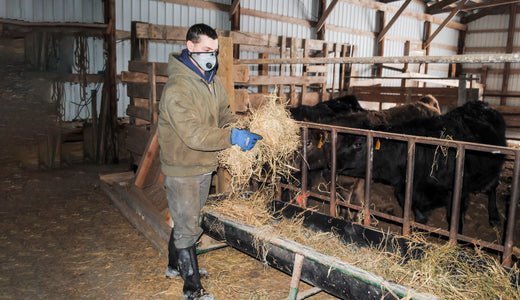
What PPE Do Farmers Need? The Complete Agricultural Safety Guide
Agriculture is consistently ranked among the most dangerous industries in the United States. According to the CDC/NIOSH, farmers face injury and illness rates significantly higher than the national average across industries — from equipment hazards and physical strain to chemical exposure and respiratory hazards that accumulate silently over years of unprotected work.
Of all the hazards farmers face, respiratory hazards are among the most underestimated. Grain dust, mold spores, animal dander, pesticide odors, and fine organic particulates are daily realities in agricultural work — and the damage from repeated, unprotected exposure is cumulative and largely invisible until it isn't. This guide covers the full spectrum of PPE that farmers need, with a focus on respiratory protection as the most critical and most overlooked category.
Respiratory Protection for Farmers: The Most Critical PPE Category
Farmers and agricultural workers encounter three categories of respiratory hazards, as identified by OSHA's agricultural operations guidance:
- Particulate contaminants — grain dust, mold spores, animal dander, poultry dust, road and field dust, and organic particulates from crop and livestock operations
- Organic odors and vapors — from animal barns, manure storage, pesticides, paints, adhesives, and organic compounds in agricultural environments
- Oxygen-deficient and toxic gas atmospheres — manure storage pits, oxygen-limiting silos, and confined spaces where toxic gases can accumulate
Important: RZ Mask products are designed for general particulate filtration and organic odor reduction — specifically for Category 1 and the organic odor component of Category 2. They are not designed for protection against pesticides at regulated exposure levels, toxic gases, oxygen-deficient atmospheres, or confined space hazards. For these environments, consult your safety officer and applicable OSHA Respiratory Protection Standards for appropriate certified PPE.
What Farmers Are Breathing in the Field and Barn
The particulate and organic odor hazards in agricultural environments are significant and varied:
- Grain dust — one of the most common agricultural respiratory hazards; fine grain dust particles penetrate deep into the respiratory system with repeated exposure; OSHA has established Permissible Exposure Limits (PELs) for grain dust
- Mold spores — stored grain, hay, and organic matter generate mold spores that become airborne during handling; "Farmer's Lung" is a well-documented occupational respiratory condition associated with repeated mold spore exposure
- Animal dander and poultry dust — livestock and poultry operations generate fine biological particles that remain airborne for extended periods in enclosed barn environments
- Manure and organic odors — animal barns are known for extreme organic odors from biological decomposition; active carbon filtration is specifically designed to help reduce these organic odors
- Field and road dust — tractor operation, tillage, and field work generate fine dust at high concentrations, especially in dry conditions
- Crop harvest dust — combining, harvesting, and processing crops generates concentrated fine particulates at the operator's breathing zone
The Right RZ Mask for Agricultural Work
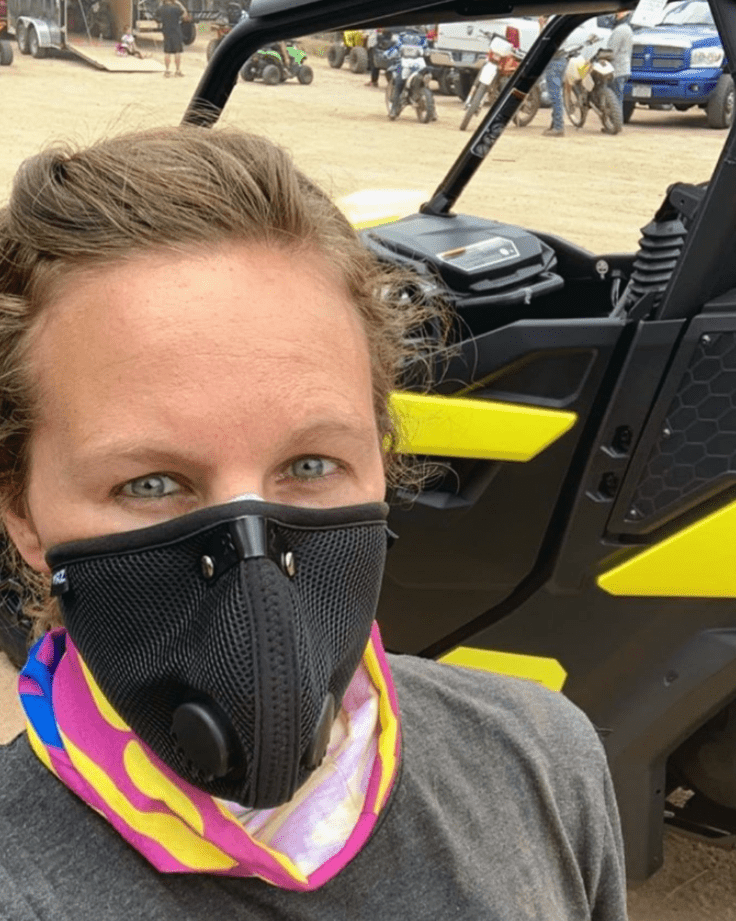
For the particulate and organic odor hazards of everyday agricultural work, the RZM3 premium reusable mask with F1 or F3 Active Carbon Filter is the go-to choice for farmers and agricultural workers. It delivers:
- Particulate filtration down to 0.1 micron — capturing grain dust, mold spores, animal dander, poultry dust, and field dust at the particle sizes that matter most for respiratory health
- Active carbon organic odor reduction — designed to help reduce organic odors from animal barns, manure, and organic agricultural environments
- 360° perimeter seal with adjustable nose clip — a complete seal that holds through active physical farm work; proper fit is essential for effective filtration
- Patented three-strap system — maintains a secure fit through bending, lifting, and active outdoor work; compatible with hats and farm headgear
- Dual discharge valves — actively exhaust heat and moisture for all-day comfort during physically demanding farm work
- Reusable with replaceable filters — cost-effective for regular agricultural use; replace filters when breathing resistance increases or after extended use in heavy dust conditions
For high-exertion agricultural work — manual harvesting, intensive physical labor in hot conditions — the RZ Airflow breathable mask is engineered for maximum airflow during physically demanding activity.
For professional agricultural operations with compliance requirements, the RZ Pro FFP2 certified respirator and RZ Pro FFP3 certified respirator provide CE-certified respiratory protection for environments where certified documentation is required. Consult your safety officer for guidance on your specific regulatory requirements.
When to Wear Respiratory Protection on the Farm
- Grain bin work — always; grain dust concentrations in and around bins can be extremely high
- Combining and harvesting — always; crop dust at the operator's breathing zone is significant during harvest operations
- Animal barn work — always in enclosed livestock and poultry facilities; biological particle and organic odor concentrations are highest in enclosed barn environments
- Hay and straw handling — always; mold spores from stored hay are a primary cause of Farmer's Lung
- Tractor and field work in dry conditions — when visible dust is generated; fine particles remain airborne long after visible dust settles
- Pesticide application — consult your safety officer and pesticide label for appropriate certified PPE; RZ Mask products are not designed for pesticide vapor protection at regulated exposure levels
Eye Protection for Farmers
Eye injuries are among the most common agricultural injuries — and among the most preventable. Feed grinding, chemical handling, welding, and any task in a dusty environment require appropriate eye protection. According to Ag Safety & Health, most agricultural eye injuries can be prevented with proper protective eyewear.
Key eye protection guidelines for farmers:
- Wear safety glasses or goggles that meet the ANSI Z87.1 standard for impact and dust protection
- Use tinted lenses for outdoor work to protect against UV exposure
- Always put on protective eyewear before entering areas where hazards may be present
- Check eyewear regularly for damage and replace if defects are found
- For chemical splash hazards, use chemical splash goggles rather than standard safety glasses
Hearing Protection for Farmers
Hearing loss is one of the most common occupational health conditions among farmers. According to the Great Plains Center for Agricultural Health, noise-induced hearing loss from grain dryers, tractors, combines, livestock, and chainsaws is widespread in agricultural communities — and permanent. The damage accumulates gradually over years of unprotected exposure.
OSHA requires hearing protection when noise levels exceed 85 decibels (dB) as an 8-hour time-weighted average. Common farm equipment noise levels:
- Tractors: 85–100 dB
- Combines: 85–105 dB
- Grain dryers: 85–100 dB
- Chainsaws: 100–110 dB
- Livestock: up to 100+ dB in enclosed facilities
Use hearing protection that meets ANSI S3.19 standards and provides adequate noise reduction for your specific equipment and environment. Earmuffs with a Noise Reduction Rating (NRR) of 25+ dB are appropriate for most high-noise farm equipment operations.
Head Protection for Farmers
When working around equipment with impact and penetration hazards — including overhead hazards from equipment, falling objects, and low clearances — wear a safety helmet or hard hat that meets the ANSI Z89.1 standard. For sun exposure during outdoor field work, wear a wide-brim hat and apply broad-spectrum sunscreen with SPF 30 or higher. The Skin Cancer Foundation recommends UPF 30+ clothing for extended outdoor sun exposure.
Foot Protection for Farmers
Foot injuries from animals, dropped equipment, and sharp objects are common in agricultural settings. Always wear safety footwear when working around livestock, heavy equipment, or sharp materials. Choose work boots that meet ASTM F2412 and F2413 standards for impact and compression resistance. Steel-toed boots are appropriate for most heavy agricultural equipment environments.
Body and Skin Protection for Farmers
For chemical handling and pesticide application, wear appropriate chemical-resistant gloves, coveralls, and protective clothing as specified on the pesticide label and applicable regulations. For general field work, wear long sleeves and pants in tightly woven fabrics that provide UV protection. The AgriSafe Network provides comprehensive guidance on agricultural PPE from head to toe.
Frequently Asked Questions: Farm PPE and Respiratory Protection
What is the best dust mask for grain bin work?
The RZM3 with F3 Active Carbon Filter is designed for grain bin work — filtration down to 0.1 micron for fine grain dust, active carbon to help reduce organic odors, and a complete 360° seal that holds through active physical work. For professional operations with compliance requirements, the RZ Pro FFP2 or RZ Pro FFP3 certified respirators are the appropriate certified options.
Can RZ Mask protect against pesticide vapors?
No. RZ Mask products are designed for general particulate filtration and organic odor reduction — not for protection against pesticides at regulated exposure levels. Always follow the pesticide label and applicable OSHA standards for appropriate certified respiratory protection during pesticide application. Consult your safety officer for guidance.
What causes Farmer's Lung and how can I prevent it?
Farmer's Lung is an occupational respiratory condition caused by repeated inhalation of mold spores from moldy hay, grain, and organic matter. Prevention requires consistent respiratory protection during hay and grain handling — particularly when working with stored or damp materials where mold growth is most significant. The RZM3 with F1 or F3 Active Carbon Filter is designed to filter mold spores and help reduce organic odors from agricultural environments.
How often should I replace my RZ Mask filter for farm work?
In heavy dust environments like grain bins and harvest operations, replace your filter after approximately 20–30 hours of use or when breathing resistance increases noticeably. In moderate dust environments like general field work and barn operations, approximately 30–40 hours. Replace immediately if the filter becomes visibly soiled or damaged. Replacement filters are available directly from RZ Mask.
Is the RZM3 comfortable enough to wear all day on the farm?
The RZM3 is engineered for all-day wear during physically demanding work. Its dual discharge valves actively exhaust heat and moisture with every exhale, keeping the mask interior cooler and drier than masks without discharge valves. Its three-strap system maintains a secure fit without excessive pressure. Farmers who switch to the RZM3 consistently report wearing it through full work days without the discomfort that causes most people to remove their mask prematurely.
Protect Your Health. Protect Your Livelihood.
Farming is one of the most physically demanding and hazardous occupations in the world — and the farmers who protect their health are the ones who can keep doing the work they love for decades. Respiratory protection is the most critical and most overlooked category of farm PPE. The damage from repeated, unprotected grain dust and mold spore exposure is cumulative and permanent.
The RZM3 breathable reusable mask is designed to be the mask that farmers actually wear — comfortable enough for all-day use, effective enough to actually matter, and built to last through a full season of agricultural work.
Explore the full RZ Mask lineup: the RZM3 premium reusable mask, the RZ Airflow comfort-focused mask, the RZ Pro FFP2 certified respirator, and the RZ Pro FFP3 certified respirator.
For agricultural safety guidance, visit CDC/NIOSH Agricultural Safety, OSHA Agricultural Operations, and AgriSafe Network. RZ Mask products are designed for general particulate filtration and organic odor reduction — not for pesticide vapor protection, toxic gas environments, or oxygen-deficient atmospheres. Consult your safety officer for workplace-specific PPE requirements.





RZ Asks a Pro Landscaper: How Should You Prep Your Yard for Winter?
Personal Health: Tips for Fall Allergies