
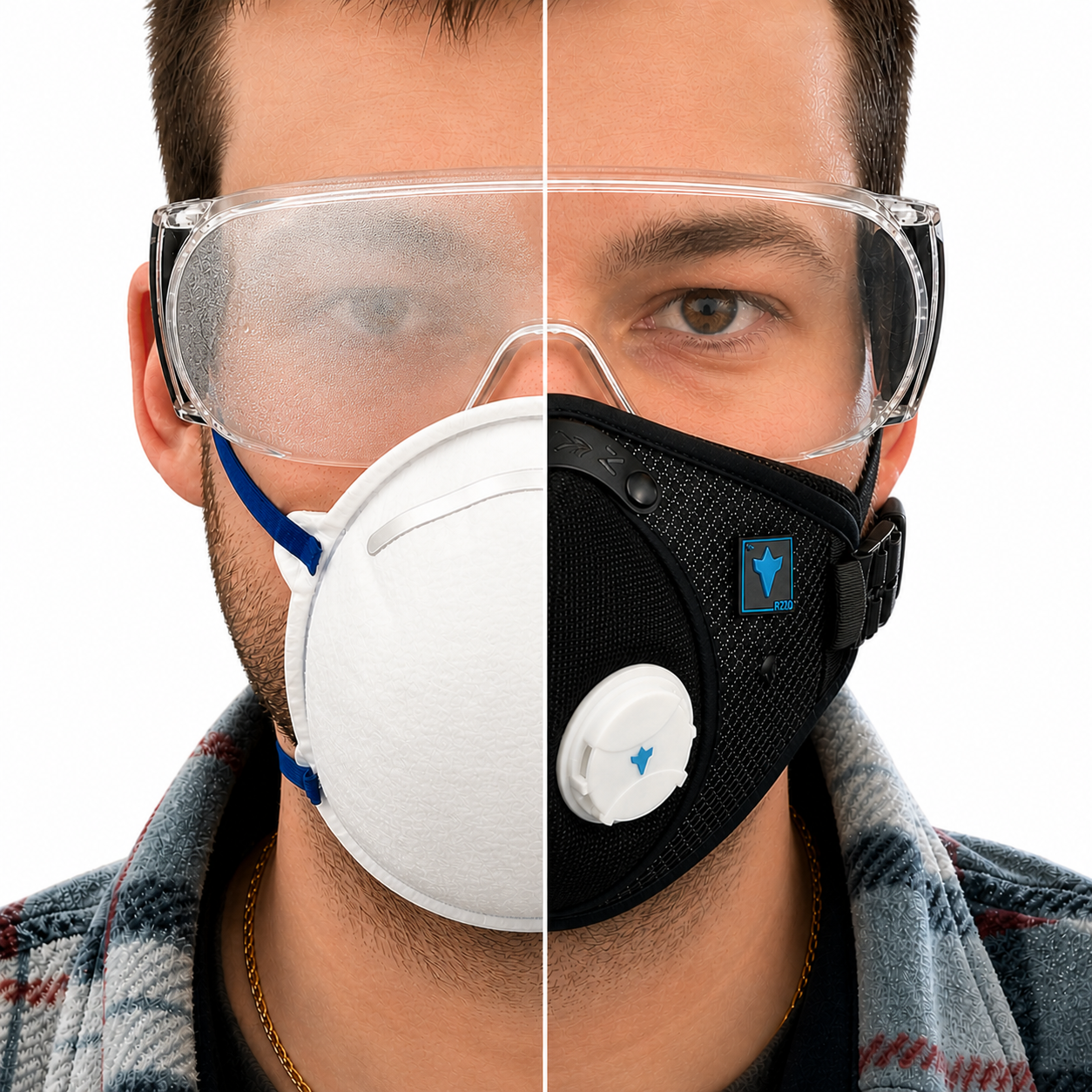
Why Paper Masks Fog Your Safety Glasses — And What to Do About It
You put on your safety glasses. You put on your dust mask. You start working. Within minutes, your lenses are fogged and you can't see clearly.
Most people respond the same way: they pull the mask down to clear their vision. The mask comes off. The dust doesn't stop. And the protection that was supposed to be there for the whole session is gone within the first few minutes.
This is one of the most common and most overlooked problems with paper masks and disposable N95s — and it's a problem the RZM3 was specifically engineered to help address.
Why Paper Masks Fog Safety Glasses
The physics are straightforward. When you exhale, warm moist air exits your lungs and needs somewhere to go. A paper mask or disposable N95 has no active exhale management system. The exhaled air takes the path of least resistance — which is almost always upward, through gaps at the nose bridge and cheeks, directly onto the lenses of your safety glasses or goggles.
Warm moist air hitting cooler lens surfaces creates condensation. Condensation fogs lenses. Fogged lenses reduce visibility. Reduced visibility on a job site, in a woodshop, or in any environment where tools and machinery are in use is a genuine safety concern.
The nose bridge gap is the primary culprit. Most paper masks have a thin wire nose clip that provides minimal customization and minimal seal at the nose bridge. Even when pressed down firmly, the seal degrades quickly through movement and breathing. The result is a persistent upward exhale pathway that fogs lenses throughout the work session.
Why This Matters Beyond Comfort
Fogged safety glasses are more than an inconvenience. In any environment where tools, machinery, or moving equipment are present, reduced visibility is a safety concern. Workers who pull their mask down to clear fogged lenses are making a choice between respiratory protection and clear vision — a choice they shouldn't have to make.
The practical result is that many workers in dusty environments — woodworkers, hobby farmers, outdoor enthusiasts, and others who wear safety glasses — stop wearing their mask consistently because the fogging problem makes it impractical. Inconsistent mask use means inconsistent protection.
How the RZM3 Is Designed to Help
The RZM3 addresses the fogging problem through two integrated components of the RZ SECURE 360 Seal™:
Adjustable Nose Clip
The RZM3's adjustable nose clip is engineered to be shaped precisely to the individual wearer's nose profile — creating a complete, custom seal at the nose bridge. By sealing the nose bridge properly, the primary upward exhale pathway is significantly reduced. Less air escaping upward means less fogging on lenses above.
Dual One-Way Discharge Valves
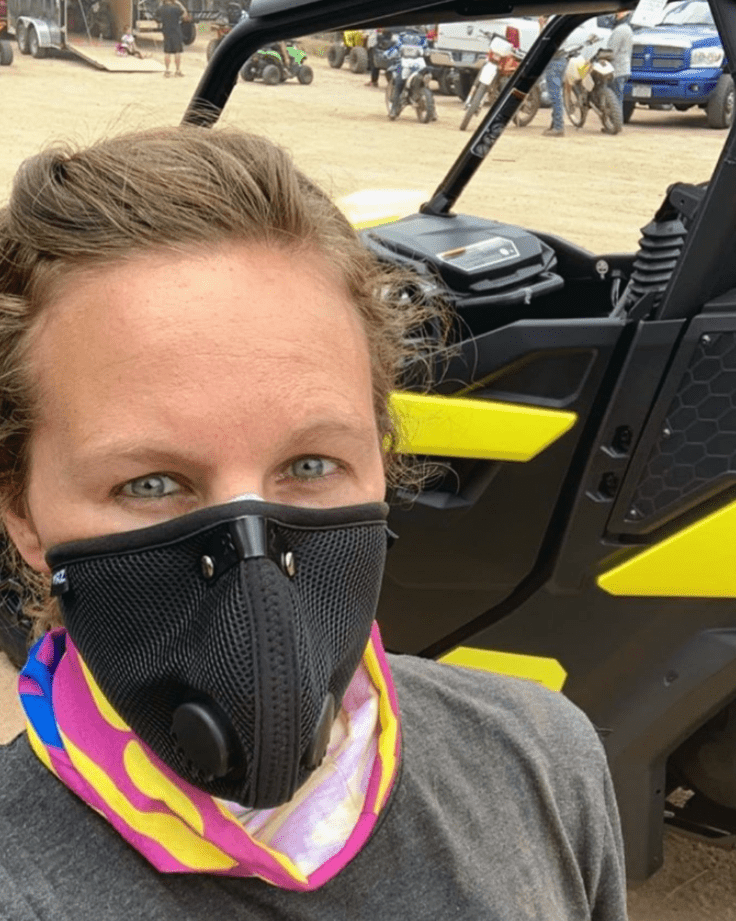
The RZM3's dual discharge valves provide a low-resistance exhale pathway that actively directs warm exhaled air downward and away from the face — and away from safety glasses and goggles above. Rather than allowing exhaled air to build pressure inside the mask and escape through gaps, the discharge valves channel it out through a controlled pathway that doesn't direct it toward lenses.
Together, these two features work to significantly reduce the fogging that causes most mask wearers to pull their mask down mid-task. For details on how this works for your specific glasses or goggle setup, contact us directly.
The Three-Strap System and Seal Stability
Fogging often gets worse through movement because movement causes the mask to shift — breaking the nose bridge seal and reopening the upward exhale pathway. The RZM3's patented three-strap system maintains consistent seal pressure through bending, lifting, and active physical work, helping to keep the nose bridge seal intact through the full work session rather than just at the start.
Three ways to wear it: head strap for maximum stability, neck loop for quick on/off between tasks, ear loop for lighter use. The head strap configuration provides the most stable platform for maintaining the nose bridge seal through active movement.
Who This Matters Most For
The fogging problem is most acute for:
- Hobby woodworkers who wear safety glasses through sanding, routing, and cutting sessions; see the Woodworking Respiratory Protection Guide
- Outdoor enthusiasts and hunters who wear goggles or glasses in dusty or cold conditions; see the Hunting Guide
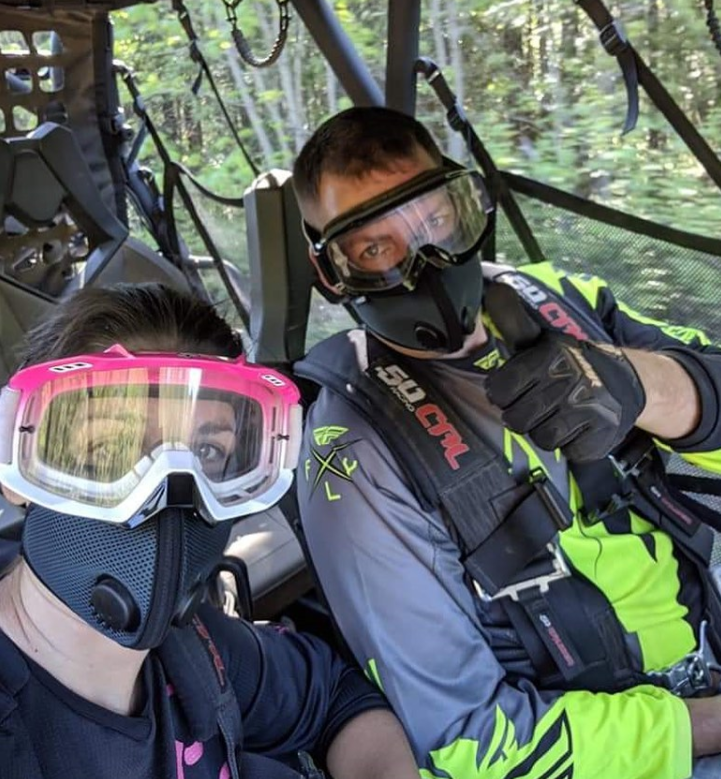
- ATV and UTV riders who wear goggles under helmets on dusty trails; see the Powersports Guide
- Agricultural lifestyle users who wear eye protection during dusty farm chores; see the Agriculture Guide
Note: For regulated workplace environments where eye and respiratory protection requirements apply, consult your safety officer. Where voluntary use of non-NIOSH-certified masks is permitted under an employer's respiratory protection program, contact us for guidance.
The Bottom Line
Paper masks and disposable N95s fog safety glasses because they have no active exhale management and no meaningful nose bridge seal. The result is a choice between clear vision and respiratory protection — and most people choose clear vision by pulling their mask down.
The RZM3 is designed to help significantly reduce this problem through the adjustable nose clip and dual discharge valves of the RZ SECURE 360 Seal™. It's one of the most common reasons woodworkers, outdoor enthusiasts, and safety glasses wearers make the switch from disposable to reusable.
Explore the RZM3 or contact us with any questions about fit and fogging for your specific setup.
Shop the RZM3 | RZ Pro FFP2 | RZ Pro FFP3
RZ Mask products are designed for general particulate filtration and organic odor reduction. The RZM3 is not a NIOSH-certified respirator. No-fog performance may vary by face shape, glasses fit, and working conditions. Not intended to satisfy occupational respiratory protection requirements. Consult your safety officer for workplace-specific guidance.



Why a Reusable Dust Mask Outperforms Disposable for Woodworking, Farming, and Outdoor Use
RZ Mask Since 2010: Why the Original Reusable Mask Still Leads the Category