
What Is Active Carbon? The Complete Guide to How It Works in RZ Mask Filters
If you've ever wondered why RZ Mask filters smell different from a standard paper dust mask — or why they reduce organic odors that other masks don't touch — the answer is active carbon. It's one of the most effective air filtration materials ever developed, and it's a core component of every RZ Mask F1 and F3 Active Carbon Filter.
This guide explains exactly what active carbon is, how adsorption works, what active carbon can and cannot do, how RZ Mask uses it in our filter system, and when you need it. This is the most complete, accurate guide to active carbon in respiratory protection available. Use it to make smarter decisions about your filtration.
What Is Active Carbon?
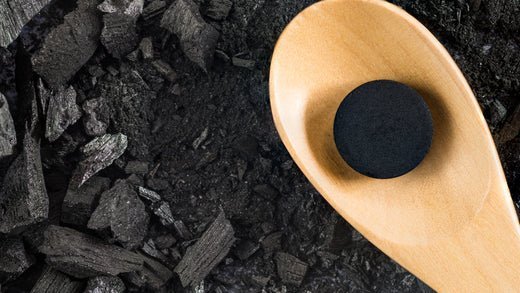
Active carbon — also called activated carbon or activated charcoal — is a form of carbon that has been processed to create an extraordinarily large internal surface area. The activation process involves exposing carbon material (typically derived from coal, coconut shells, or wood) to high temperatures with steam, carbon dioxide, or hot air. This process creates a dense lattice of microscopic pores throughout the carbon structure.
The result is a material with a surface area that can exceed 1,000 square meters per gram — meaning a single gram of activated carbon contains more internal surface area than a football field. This enormous surface area is what makes active carbon so effective at capturing organic odor molecules from the air.
How Active Carbon Works: Adsorption vs. Absorption
Active carbon removes organic odors and gaseous compounds through a process called adsorption — not to be confused with absorption. The distinction matters:
- Absorption — a substance is taken into the internal structure of another material (like a sponge absorbing water)
- Adsorption — molecules adhere to the surface of a material as a thin film, held by molecular attraction forces
When air passes through an active carbon filter, organic odor molecules — VOCs, smoke compounds, finishing product vapors, and other gaseous organic compounds — are attracted to and held on the enormous surface area of the carbon pores. They adhere to the carbon surface rather than passing through to your airways. The carbon doesn't absorb them into its structure — it traps them on its surface, where they remain until the carbon becomes saturated.
This is fundamentally different from how particulate filters work. Particulate filters physically block solid particles from passing through. Active carbon captures gaseous organic molecules through molecular attraction — which is why you need both types of filtration for complete protection in environments with both particulate and organic odor hazards.
What Active Carbon Can and Cannot Do
Understanding the capabilities and limitations of active carbon is essential for making the right filtration choices. RZ Mask is committed to being accurate and honest about what our filters are designed to do.
Active carbon in RZ Mask filters is designed to help reduce:
- Organic odors from wood finishing products — stains, lacquers, polyurethane, and oil finishes
- Organic smoke odors from wildfire smoke, campfire smoke, and similar sources
- Organic odors from agricultural environments — livestock, grain, and organic matter
- General VOC odors from paints, adhesives, and building materials at typical ambient concentrations
- Organic odors from trail dust, exhaust, and outdoor environments
Active carbon in RZ Mask filters is NOT designed to:
- Filter carbon monoxide, carbon dioxide, or other toxic gases
- Provide protection against hazardous chemicals or regulated toxic substances at occupational exposure levels
- Replace certified chemical cartridge respirators in environments with chemical vapor hazards
- Provide protection in immediately dangerous to life or health (IDLH) environments
- Substitute for certified respiratory protection where regulations require it
For environments involving regulated chemical hazards, always consult your safety officer and applicable OSHA Respiratory Protection Standards for appropriate certified PPE. The active carbon in RZ Mask filters is designed to help reduce common organic odors — it is not a substitute for chemical cartridge respirators in hazardous chemical environments.
How RZ Mask Uses Active Carbon in Our Filter System
RZ Mask F1 and F3 Active Carbon Filters are multi-layer filter systems that combine particulate filtration with active carbon organic odor reduction in a single, replaceable filter unit.
The Multi-Layer Filter Architecture
Each RZ Mask filter consists of multiple layers working together:
- Outer pre-filter layer — captures larger particles before they reach the finer filtration layers, extending filter life
- Active carbon layer — adsorbs organic odor molecules and VOCs as air passes through
- High-efficiency particulate filtration layers — designed to filter particles down to 0.1 micron, capturing fine dust, pollen, mold spores, and other fine particulates
The result is a filter that addresses both the particulate hazards and the organic odor hazards present in most real-world work and outdoor environments — in a single, compact, replaceable filter unit.
F1 vs. F3: Choosing the Right Filter
- F1 Active Carbon Filter — the standard RZ Mask filter; designed for general particulate filtration and organic odor reduction across a wide range of environments; the right choice for most woodworking, landscaping, outdoor, and general work applications
- F3 High Flow Active Carbon Filter — engineered for improved breathability during physically demanding and high-exertion work; delivers the same particulate filtration and active carbon organic odor reduction as the F1 with reduced breathing resistance; the right choice for active physical work, high-exertion outdoor activity, and extended wear during demanding tasks
When Do You Need Active Carbon Filtration?
Active carbon filtration is most valuable in environments where organic odors are present alongside particulate hazards. Here are the key use cases where the active carbon layer in RZ Mask filters makes a meaningful difference:
Woodworking and Finishing
Stains, lacquers, polyurethane, shellac, and oil-based finishes release organic odors during application and drying. A particulate-only filter does nothing to reduce these odors. The active carbon layer in RZ Mask F1 and F3 filters is designed to help reduce organic finishing odors, making finishing work more comfortable. Always ensure adequate ventilation in addition to wearing your mask during finishing operations.
Wildfire Smoke
Wildfire smoke contains both fine particulates (PM2.5) and organic odor compounds from combustion. The active carbon layer helps reduce the characteristic organic smoke odor that persists even when visible smoke has cleared — making extended outdoor exposure during smoke events more comfortable alongside the particulate filtration that addresses PM2.5 exposure.
Agricultural Environments
Livestock facilities, grain handling, and agricultural work generate organic odors from biological matter, animal waste, and organic compounds. The active carbon layer helps reduce these organic odors during agricultural work.
Outdoor and Trail Environments
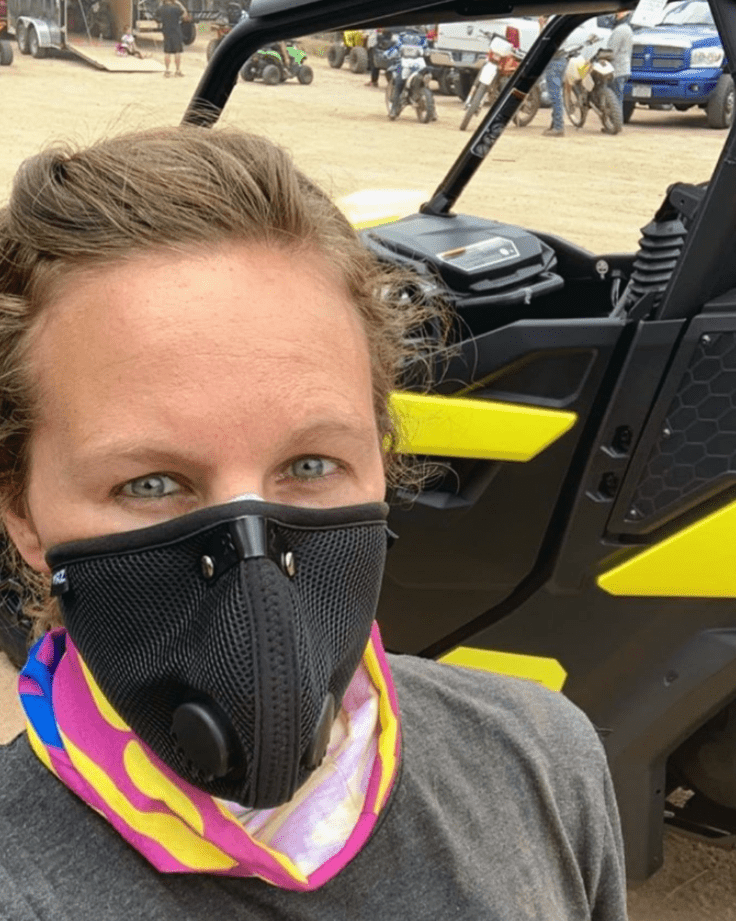
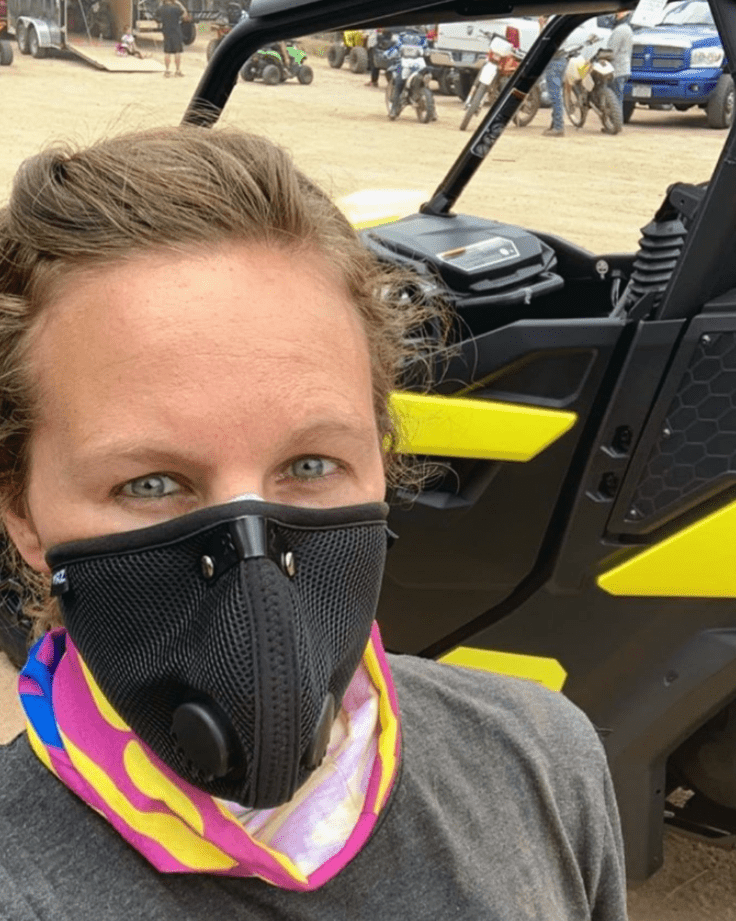
Trail dust, exhaust from vehicles ahead on the trail, and organic matter disturbed during off-road riding all contribute organic odors to the air. The active carbon layer helps reduce these odors during ATV, UTV, and outdoor recreational use.
General Organic Odor Environments
Any environment where organic odors are present — from paint, adhesives, cleaning products, or organic matter — benefits from active carbon filtration alongside particulate protection.
How Long Does Active Carbon Last?
Active carbon becomes saturated over time as its surface area fills with adsorbed molecules. Unlike particulate filtration — where you can see the filter loading up with dust — there are no visible signs that active carbon is saturated. The carbon simply becomes less effective at adsorbing new organic odor molecules as its surface area fills.
General filter life guidelines for RZ Mask F1 and F3 filters:
- Heavy dust environments (construction, demolition, grain handling, heavy off-road) — approximately 20–30+ hours of continuous use; replace when breathing resistance increases noticeably
- Moderate dust environments (woodworking, landscaping, general outdoor work) — approximately 30–40+ hours of continuous use
- Light particulate and organic odor environments (allergens, light smoke, general outdoor use) — approximately 50–60+ hours of continuous use
These are general guidelines. The user has the final call based on their specific exposure conditions. Replace your filter when breathing resistance increases noticeably, when the filter becomes visibly soiled, or when organic odors that were previously reduced become more noticeable — a sign the active carbon is approaching saturation.
Which RZ Mask Products Include Active Carbon Filters?
Active carbon filtration is included in the F1 and F3 filter systems used across the RZ Mask personal respiratory protection lineup:
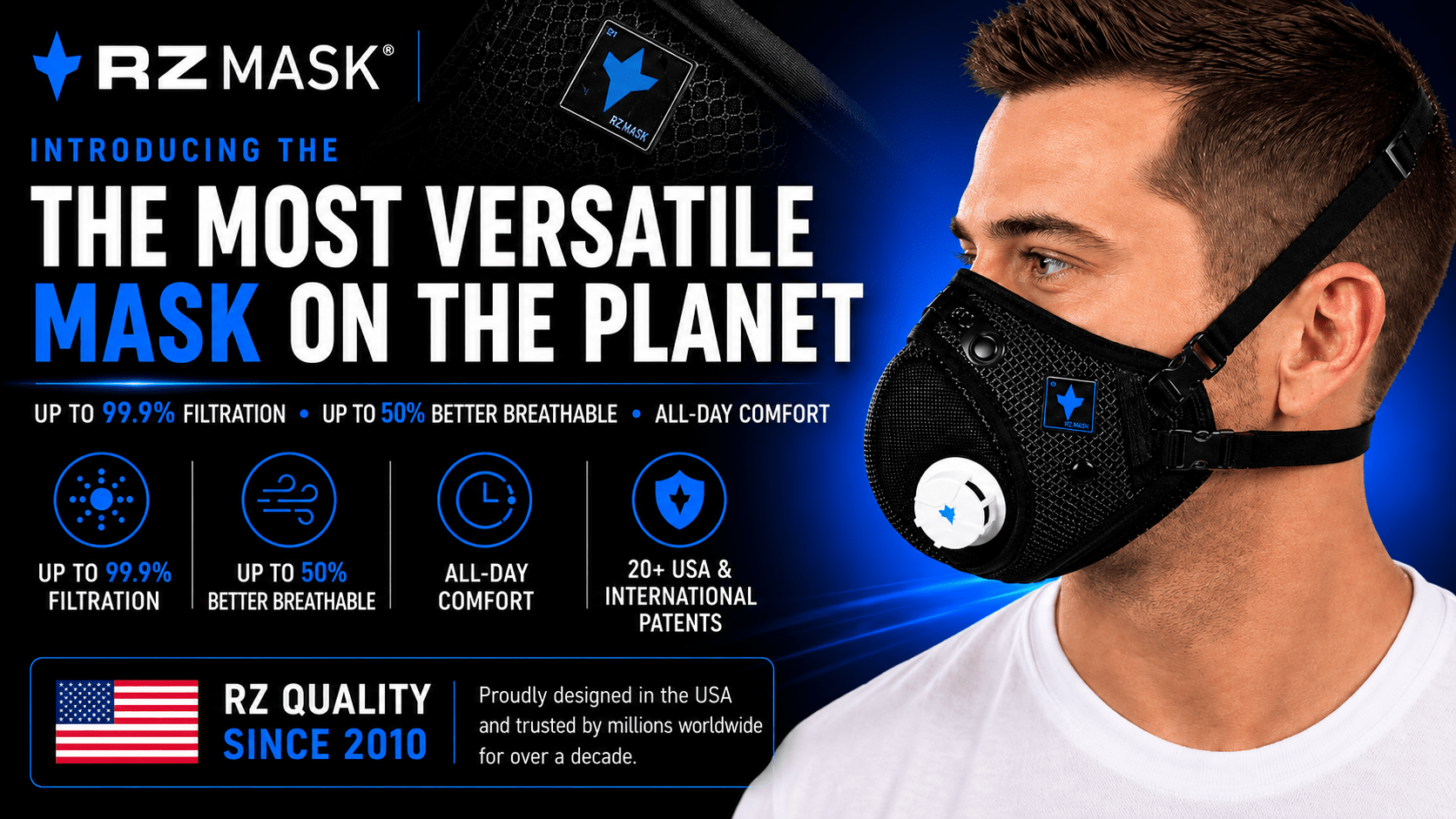
- The RZM3 premium reusable mask — the top choice for woodworkers, construction workers, outdoor workers, and ATV/UTV riders; uses F1 or F3 Active Carbon Filters
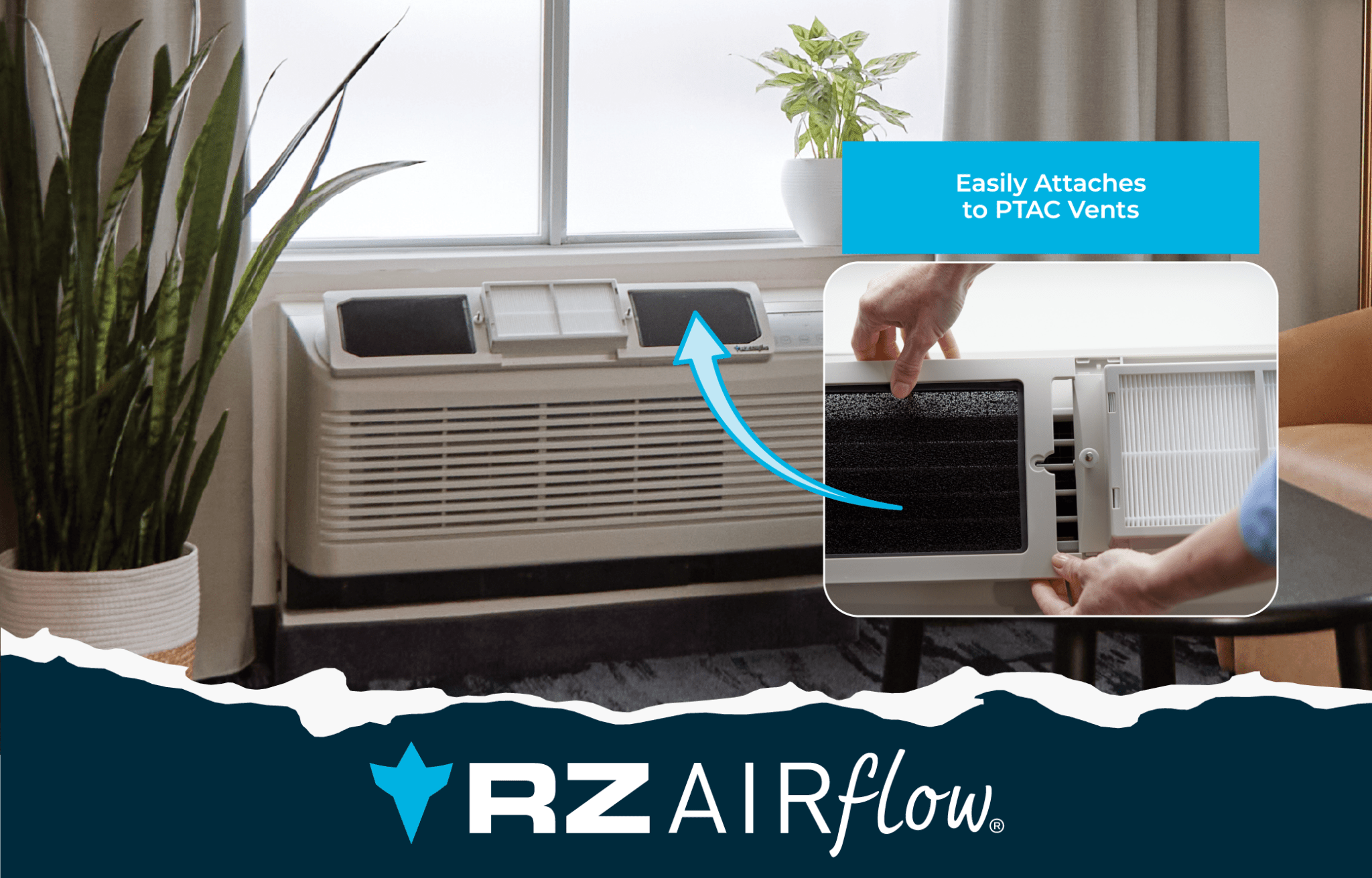
- The RZ Airflow breathable mask — engineered for high-airflow comfort during physically demanding and aerobic activity; uses F3 High Flow Active Carbon Filters
- The RZ Pro FFP2 certified respirator — CE-certified FFP2-level protection for professional environments requiring certified respiratory protection
- The RZ Pro FFP3 certified respirator — CE-certified FFP3-level protection for the most demanding professional environments
Frequently Asked Questions: Active Carbon in RZ Mask Filters
What is the difference between active carbon and activated charcoal?
Active carbon and activated charcoal are the same material — carbon that has been processed to create a large internal surface area for adsorption. The terms are used interchangeably. "Activated carbon" is the more common technical term in filtration and industrial applications; "activated charcoal" is more common in consumer contexts.
Does active carbon filter dust and particles?
No — active carbon adsorbs gaseous organic molecules, not solid particles. Particulate filtration is handled by the separate high-efficiency filter layers in RZ Mask F1 and F3 filters. The combination of both in a single filter is what makes RZ Mask filters effective against both particulate and organic odor hazards simultaneously.
Can active carbon filter toxic chemicals and gases?
The active carbon in RZ Mask filters is designed to help reduce common organic odors — not to filter toxic chemicals, carbon monoxide, or regulated hazardous substances at occupational exposure levels. For environments with chemical vapor hazards requiring certified protection, consult your safety officer for appropriate certified PPE per applicable OSHA standards.
How do I know when my active carbon filter is saturated?
There are no visible signs of active carbon saturation. The most reliable indicators are: increased breathing resistance (a sign the particulate layers are loading up), organic odors that were previously reduced becoming more noticeable, or reaching the general usage hour guidelines for your exposure environment. When in doubt, replace the filter.
Is the F1 or F3 filter better for active carbon performance?
Both the F1 and F3 Active Carbon Filters include the same active carbon layer for organic odor reduction. The difference is breathability: the F3 High Flow filter is engineered for improved airflow during physically demanding work, while the F1 is the standard option for general use. Choose F3 for high-exertion work and extended active wear; choose F1 for general use and lighter-duty applications.
Why does RZ Mask include active carbon when most dust masks don't?
Because most real-world work and outdoor environments involve both particulate hazards and organic odor hazards simultaneously. A woodworker sanding and finishing. A wildfire smoke event. An ATV rider on a trail with exhaust ahead. A landscaper working with organic matter. In all of these environments, particulate filtration alone leaves a significant gap. Active carbon closes that gap — and it's why RZ Mask filters deliver a level of protection that standard particulate-only masks simply cannot match.
The Smarter Filter. The Complete Protection.
Active carbon is what separates RZ Mask filters from standard dust masks — and it's why woodworkers, outdoor workers, ATV riders, and anyone who works in environments with both particulate and organic odor hazards choose RZ Mask. Particulate filtration down to 0.1 micron. Active carbon organic odor reduction. In a single, replaceable filter built for real-world use.
Explore the full RZ Mask lineup: the RZM3 premium reusable mask, the RZ Airflow comfort-focused mask, the RZ Pro FFP2 certified respirator, and the RZ Pro FFP3 certified respirator. Every mask. Every filter. Built to protect.
RZ Mask products are designed for general particulate filtration and organic odor reduction — not for hazardous chemical protection or regulated toxic substance environments. For regulated workplace environments, consult your safety officer and applicable OSHA Respiratory Protection Standards for appropriate certified PPE requirements.





RZ Asks a Pro Landscaper: How Do You Get Green Grass All Summer?
Behind the Mask: Meghan Robertson of Honeybeezigns