
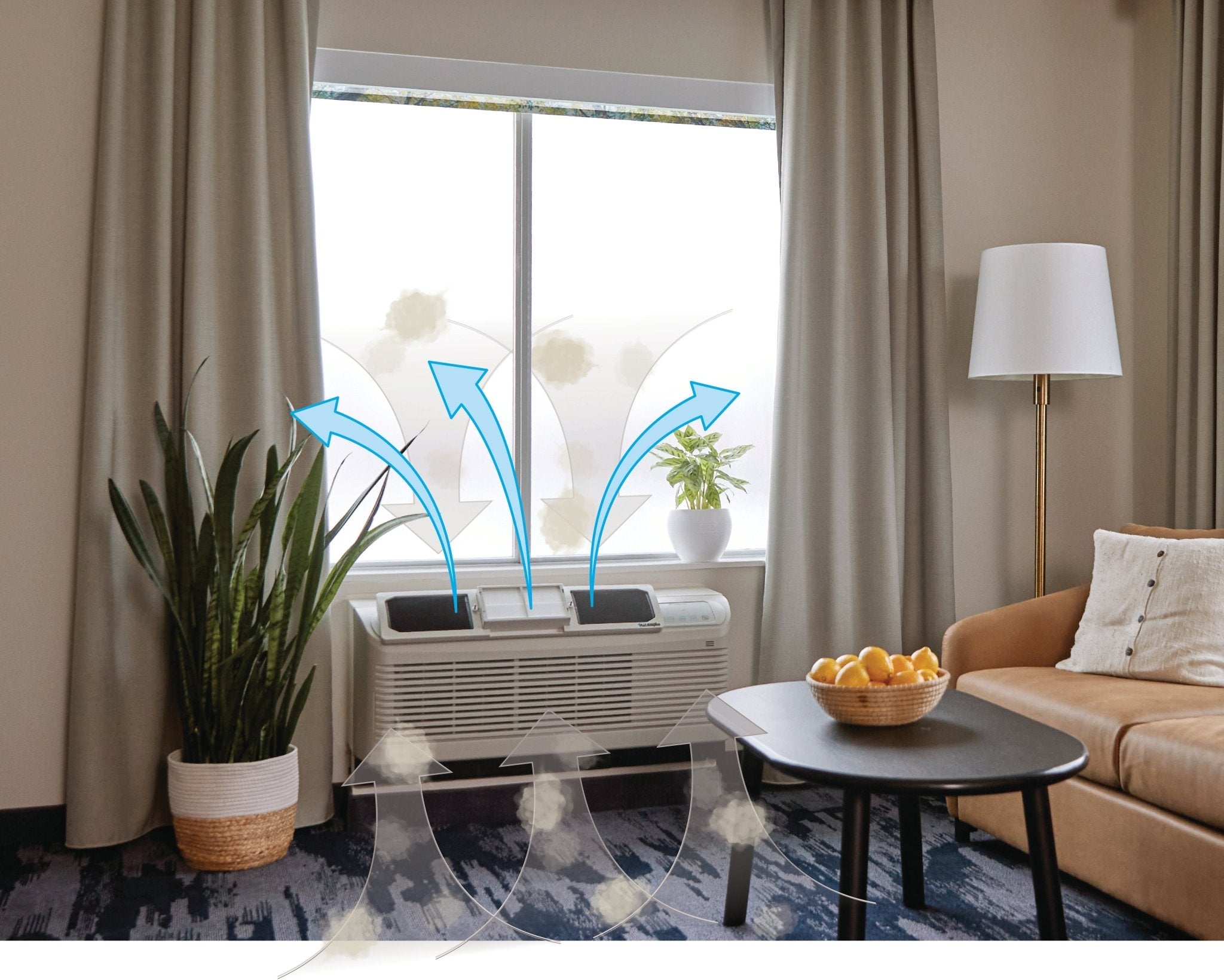
You train, walk, eat well, and live well — now think about the air you breathe at home.
If you live in a New York City or New Jersey high-rise, you already know the lifestyle. Morning coffee from your favorite spot in Hoboken or on the Upper West Side. A walk along the Hudson River Greenway or through Riverside Park. A Pilates class in Williamsburg, a Peloton session before work, or a Saturday run through Prospect Park. Dinner made from ingredients picked up at the Union Square Greenmarket or Whole Foods in Jersey City.
You invest in your health every single day. But here is a question worth asking: is the air inside your apartment keeping up with the rest of your wellness routine?
According to the U.S. Environmental Protection Agency, Americans spend about 90% of their time indoors — and some indoor air pollutant levels can be 2 to 5 times higher than typical outdoor levels. In a dense urban environment like Manhattan, Brooklyn, Queens, the Bronx, Jersey City, or Hoboken, that number carries real weight.
Why NYC and NJ Apartment Air Deserves Attention
What makes indoor air in a high-rise different?
High-rise apartments and condos in New York and New Jersey are tightly built, often with limited natural ventilation. The EPA notes that inadequate ventilation can increase indoor pollutant concentrations by reducing the amount of outdoor air that dilutes emissions from indoor sources.
In a building with dozens or hundreds of units, the air in your apartment does not exist in isolation. Cooking smells, cannabis odors from neighboring units, pet dander, hallway dust, cleaning product fumes, and particles tracked in from city streets can all contribute to what circulates through your space.
The NYC Community Air Survey has documented that air quality across New York City varies significantly by neighborhood — influenced by traffic density, cooking emissions, nearby warehouses, and local land use. And the New Jersey Department of Environmental Protection monitors ozone and particulate matter statewide, reflecting the real air quality challenges facing NJ residents in cities like Newark, Jersey City, Hoboken, and beyond.
The Active NY/NJ Lifestyle — And the Air You Come Home To
You protect your body. What about your lungs at home?
Think about a typical wellness-focused day in a NYC or NJ high-rise:
- Morning: Coffee ritual, a walk along the East River waterfront in Long Island City or the Edgewater boardwalk, or a run through Central Park or Branch Brook Park in Newark.
- Midday: A yoga class in Astoria, a Pilates session in DUMBO, or a gym session in Fort Lee or Weehawken.
- Afternoon: A stop at a health food store in Montclair, a farmers market in Princeton, or a gourmet grocery run in the West Village.
- Evening: Cooking a clean, intentional meal at home — salmon, roasted vegetables, a stir-fry — while your dog or cat settles in beside you.
You have thought carefully about what goes into your body. The air your lungs breathe for the other 16 hours of the day — the hours you spend inside your apartment — deserves the same attention.
What Can Linger in Apartment Air?
What are common indoor air concerns in NYC and NJ apartments?
The EPA's guide to indoor pollutants and sources identifies gases and particles from indoor sources as a primary indoor air quality concern. In a typical NYC or NJ high-rise apartment, those sources can include:
- Cooking odors and particles — daily cooking, especially at high heat, can release airborne particles and odors that linger in a closed apartment
- Cannabis odors — in buildings where cannabis use is common, odors and particles can migrate through shared ventilation, hallways, and PTAC systems
- Pet dander — dogs and cats shed dander continuously; in a smaller apartment, concentrations can build up quickly
- Dust and outdoor particles — shoes, clothing, open windows, and PTAC airflow can bring in outdoor particulate matter, pollen, and construction dust from NYC and NJ streets
- Cleaning product VOCs — common household cleaners release volatile organic compounds that can accumulate in a closed space
- Hallway and building odors — shared corridors, trash rooms, laundry areas, and neighboring units all contribute to what enters your apartment air
- Smoke — whether from outdoor sources, nearby restaurants, or building common areas, smoke particles can infiltrate indoor spaces
What Is RZ Airflow — and How Does It Work With Your PTAC?
What is the best air purifier for a NYC apartment with a PTAC unit?
Most apartments and condos in New York and New Jersey are equipped with PTAC units (Packaged Terminal Air Conditioners). These wall-mounted heating and cooling systems are the primary way air moves through your apartment.
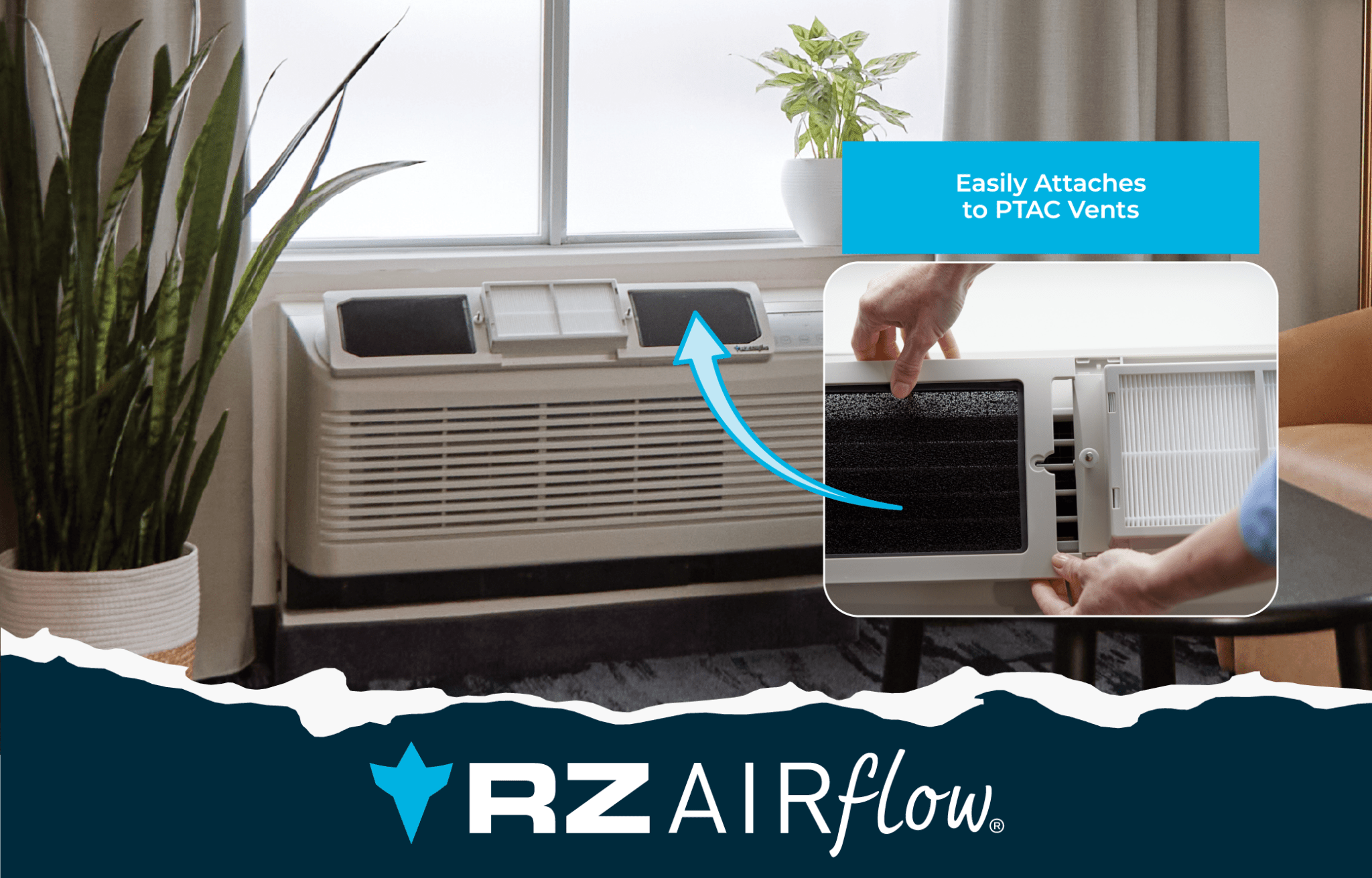
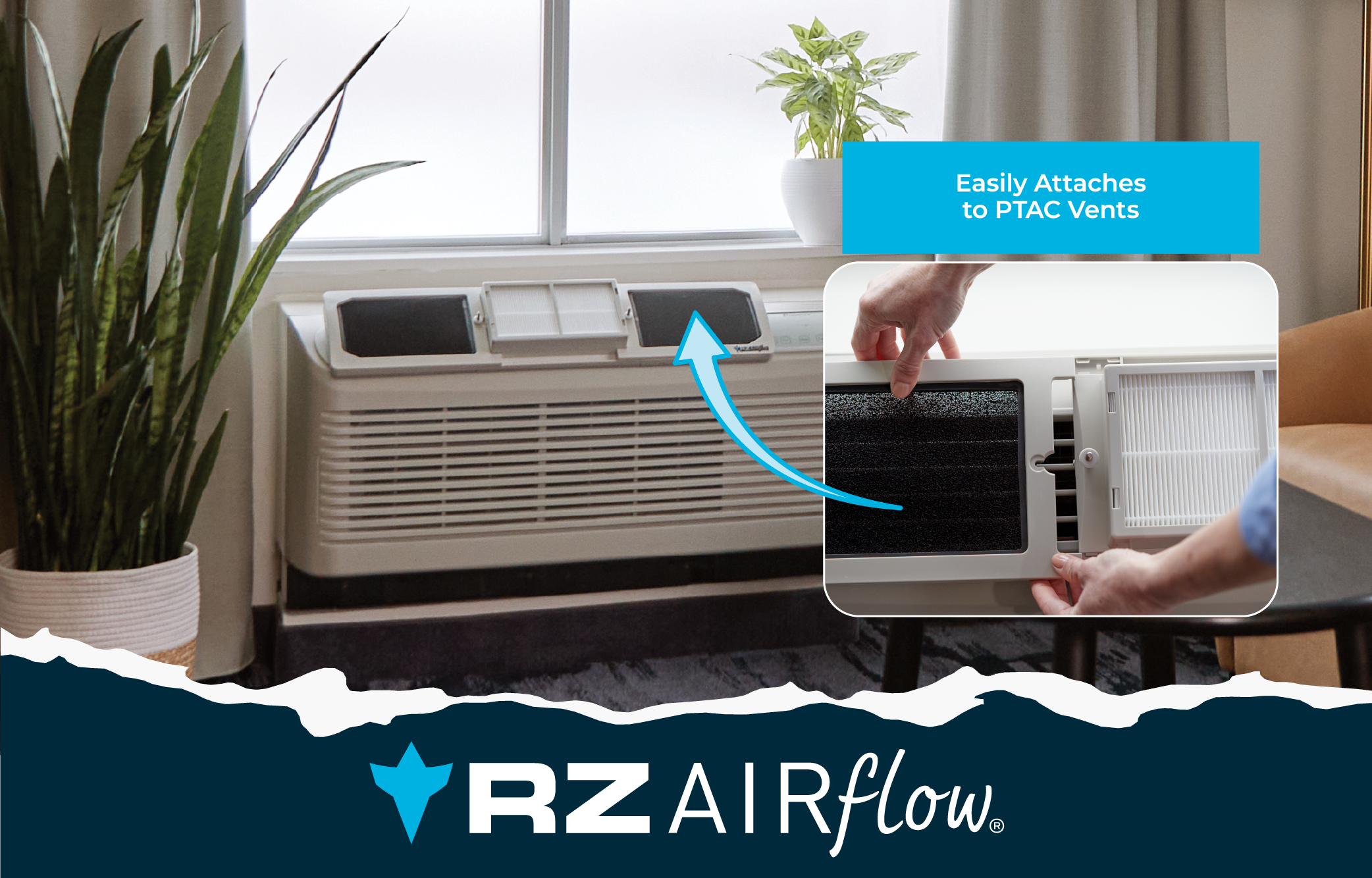
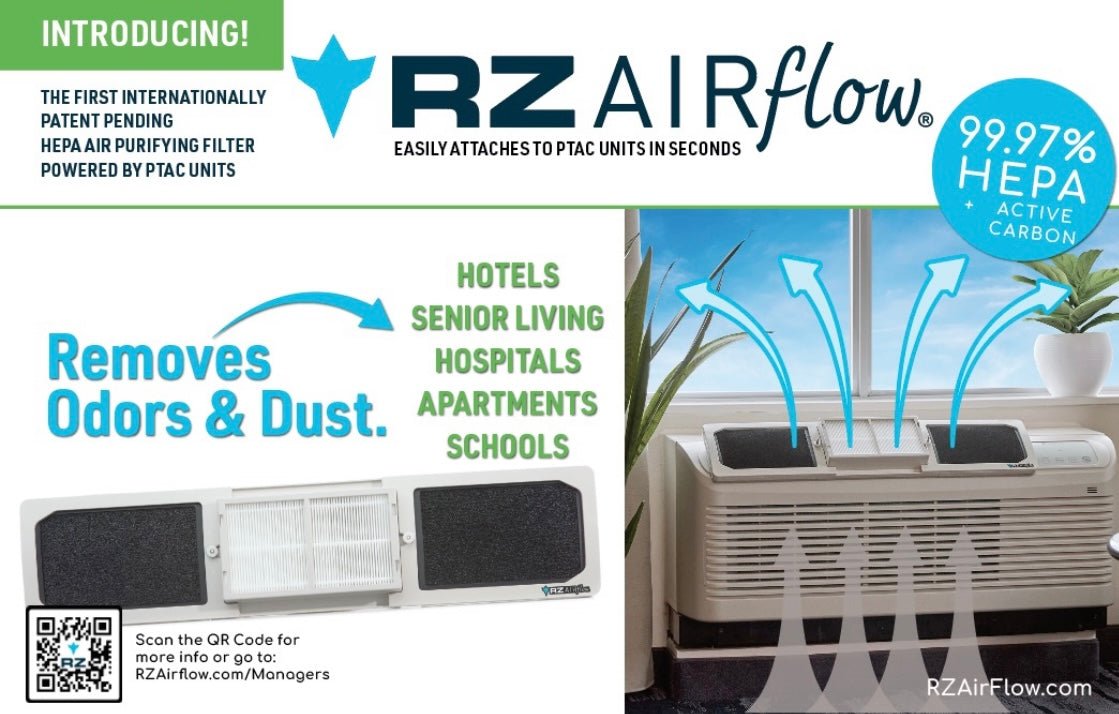
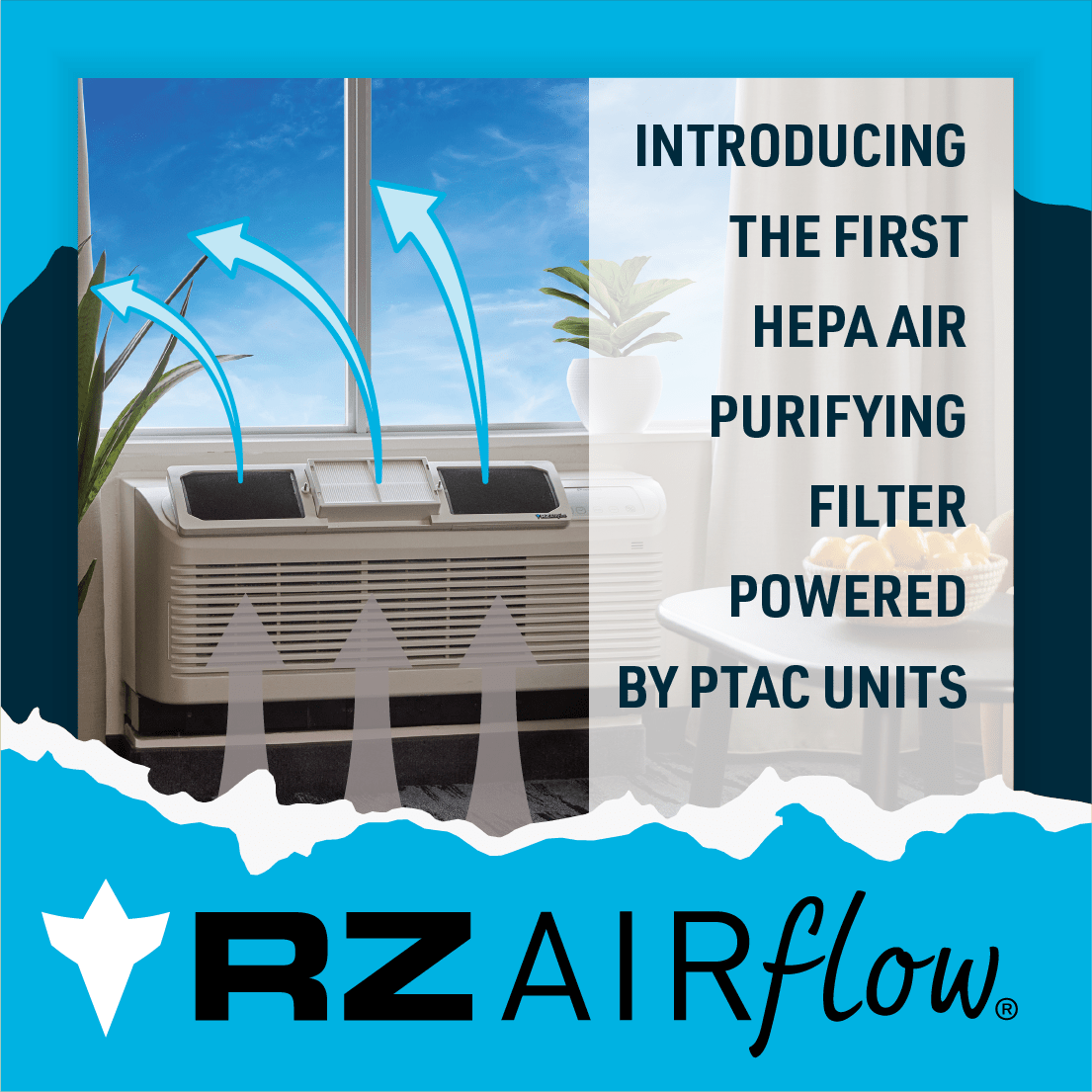
RZ Airflow is a PTAC air purification filtration system designed to install directly into your existing PTAC unit. It adds True HEPA filtration and active carbon filtration to the airflow path your PTAC already creates.
- Installs into your existing PTAC — no extra plug, no floor space, no added noise
- True HEPA filtration helps reduce fine airborne particles, dust, pollen, and pet dander
- Active carbon filtration helps reduce cooking odors, cannabis odors, pet smells, and VOCs
- Compatible with GE, Friedrich, Amana, LG, Islandaire, Carrier, Daikin, and all major PTAC brands
- Replacement HEPA and active carbon filters available
RZ Airflow is not a medical device and does not claim to cure, treat, or prevent any medical condition. People with respiratory health concerns should follow the guidance of their healthcare provider.
How Often Should You Replace RZ Airflow Filters?
How often should PTAC purifier filters be replaced?
For optimum performance, replace HEPA and active carbon filters every 3 months — especially in NYC and NJ apartments with pets, daily cooking, cannabis odors, heavy pollen seasons, wildfire smoke, or heavy PTAC use.
Shop replacement filters at rzairflow.com/collections/filters
You Take Care of Your Body. Now Take Care of the Air at Home.
You already invest in the things that matter: a gym membership in Hoboken, organic produce from the Morristown farmers market, a Peloton in your Williamsburg loft, a yoga mat in your Upper East Side studio. RZ Airflow is the next logical step — helping the PTAC unit already in your apartment support cleaner, fresher indoor air.
You take care of your body every day. Now take care of the air your lungs breathe at home.
Shop RZ Airflow → Replace Your Filters →
Live in a Multi-Unit Building?
Talk to your property manager, condo board, co-op board, or building manager about RZ Airflow multi-unit discounts and full-building custom quotes. Cleaner air can be a building-wide resident comfort upgrade.
Request a Full-Building Quote →
Frequently Asked Questions
What is RZ Airflow?
RZ Airflow is a PTAC air purification filtration system that installs into existing PTAC wall units in apartments, condos, high-rises, hotels, and senior living facilities. It adds HEPA and active carbon filtration to the airflow your PTAC already creates.
How does RZ Airflow help with cannabis odors?
RZ Airflow's active carbon filtration layer is designed to help reduce odors — including cannabis odors that may migrate from neighboring units — as air passes through the PTAC system.
How often should I replace RZ Airflow filters?
Every 3 months for optimum performance — especially in NYC and NJ apartments with pets, cooking, cannabis odors, pollen, smoke, or heavy PTAC use.
Can my building install RZ Airflow in multiple units?
Yes. Multi-unit discounts and full-building custom quotes are available. Contact RZ Airflow at rzairflow.com.
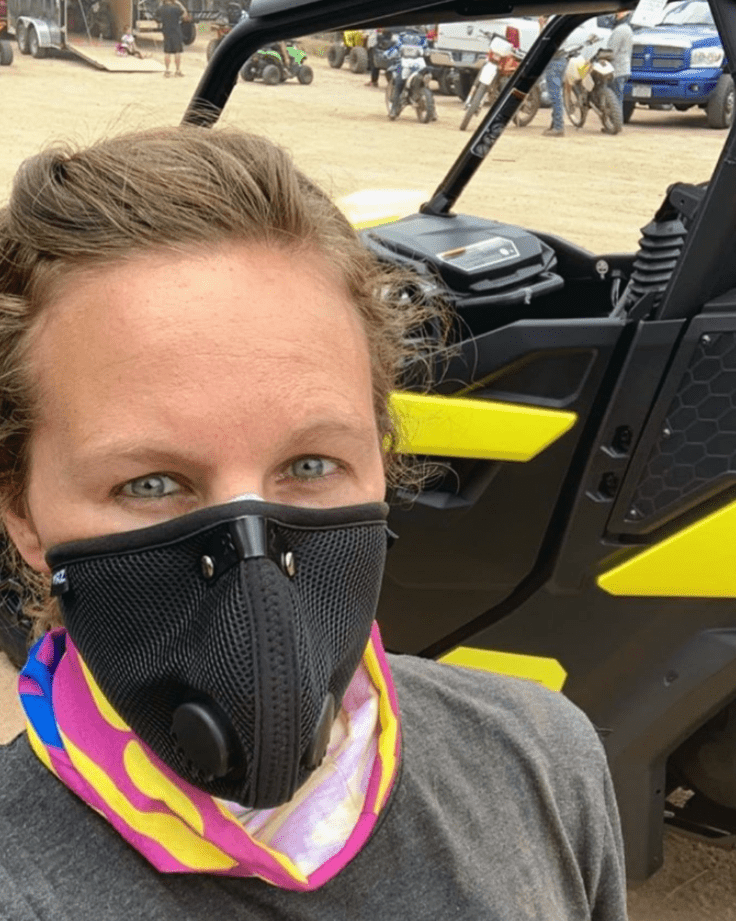


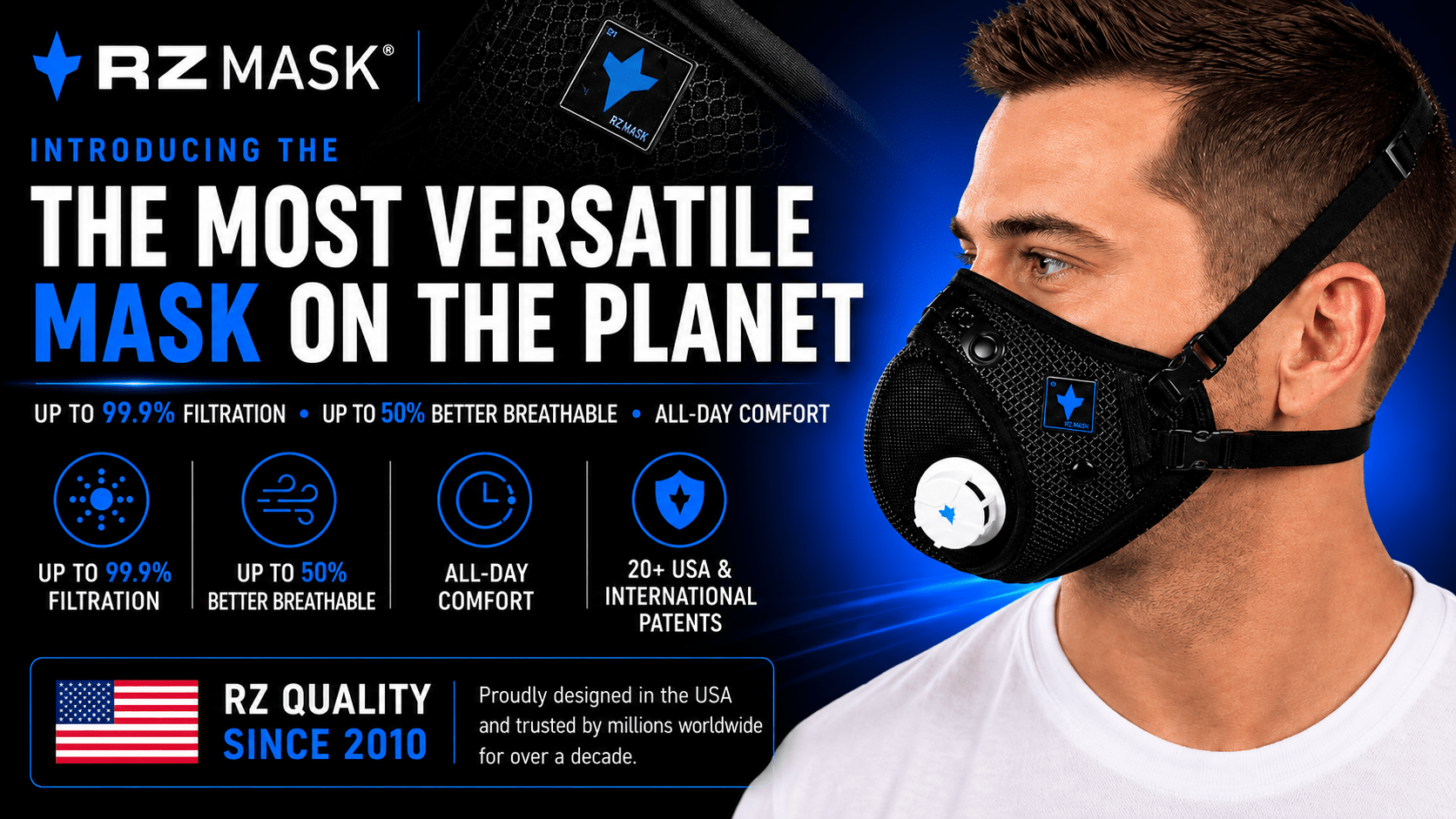


RZ Mask Since 2010: Why the Original Reusable Mask Still Leads the Category
The RZ SECURE 360 Seal™: Why Mask Fit Is the Most Critical Factor in Respiratory Protection