

RZ AIRFlow vs Standalone Air Purifiers: Which Is the Better Choice for Hotels, Senior Living & Apartments?
If you're looking to improve indoor air quality in a hotel room, senior living suite, assisted living facility, or apartment with a PTAC unit — you have two primary options: a standalone room air purifier or the RZ AIRFlow PTAC air purifying system. Both can deliver meaningful air quality improvement. But they work differently, perform differently in PTAC-equipped spaces, and have very different practical implications depending on your setting.
This guide gives you an honest, detailed comparison across every dimension that matters — so you can make the right choice for your specific situation.
The Fundamental Difference: How Each System Works
Standalone Air Purifiers
A standalone air purifier is a freestanding unit with its own fan, filter, and housing. It draws air from the room, passes it through its filter system, and returns filtered air to the room — from a single fixed location. Its effectiveness depends on its fan power, filter quality, and how well its airflow pattern covers the room from its placement location.
RZ AIRFlow (PTAC-Integrated)
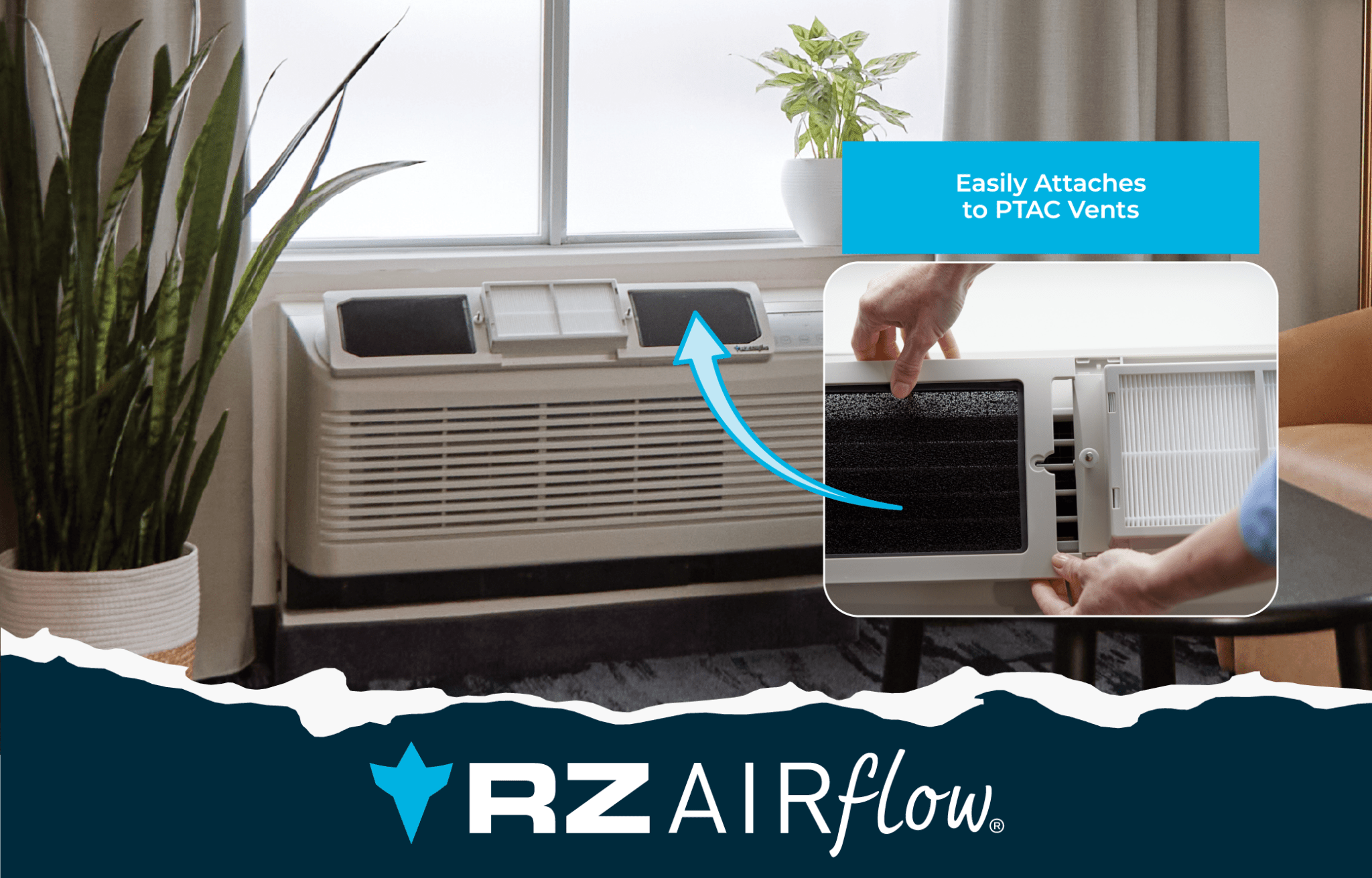
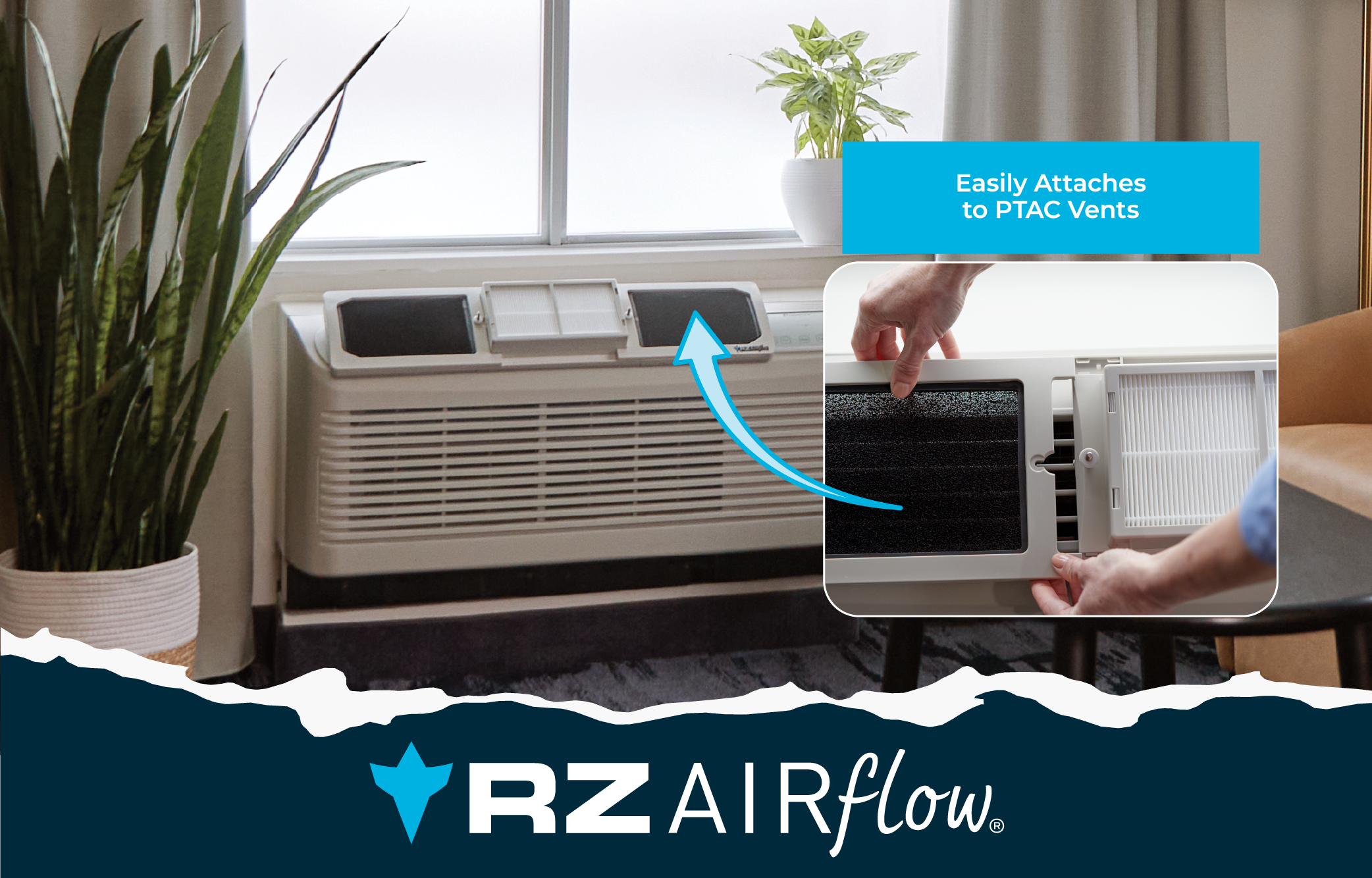
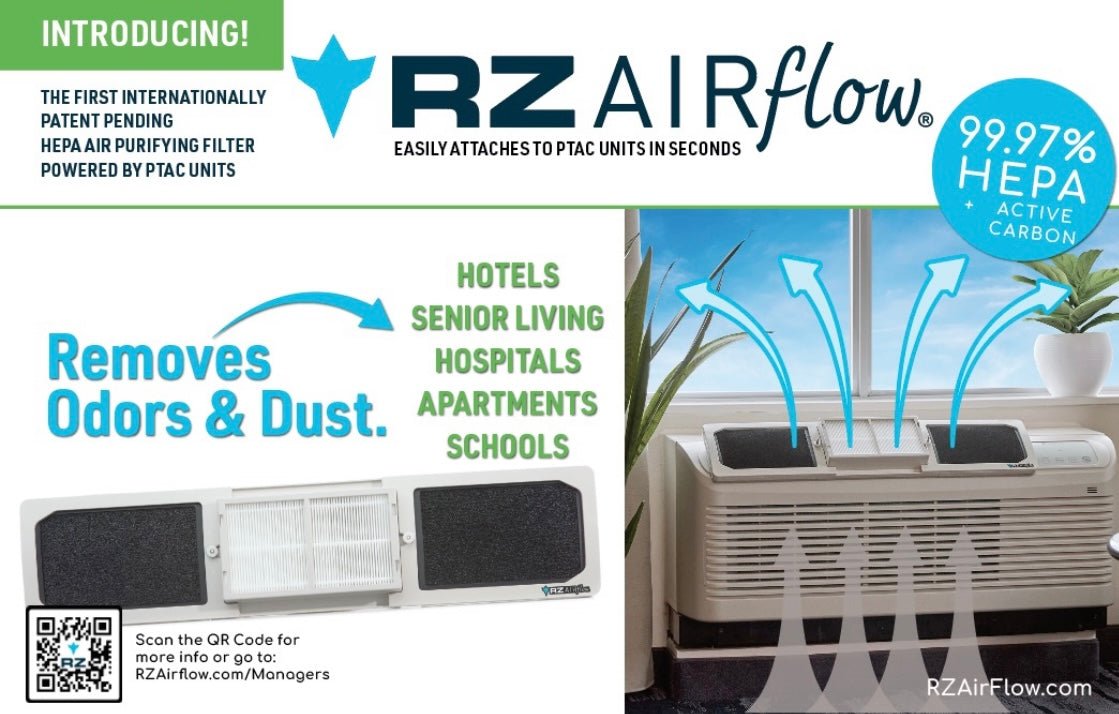
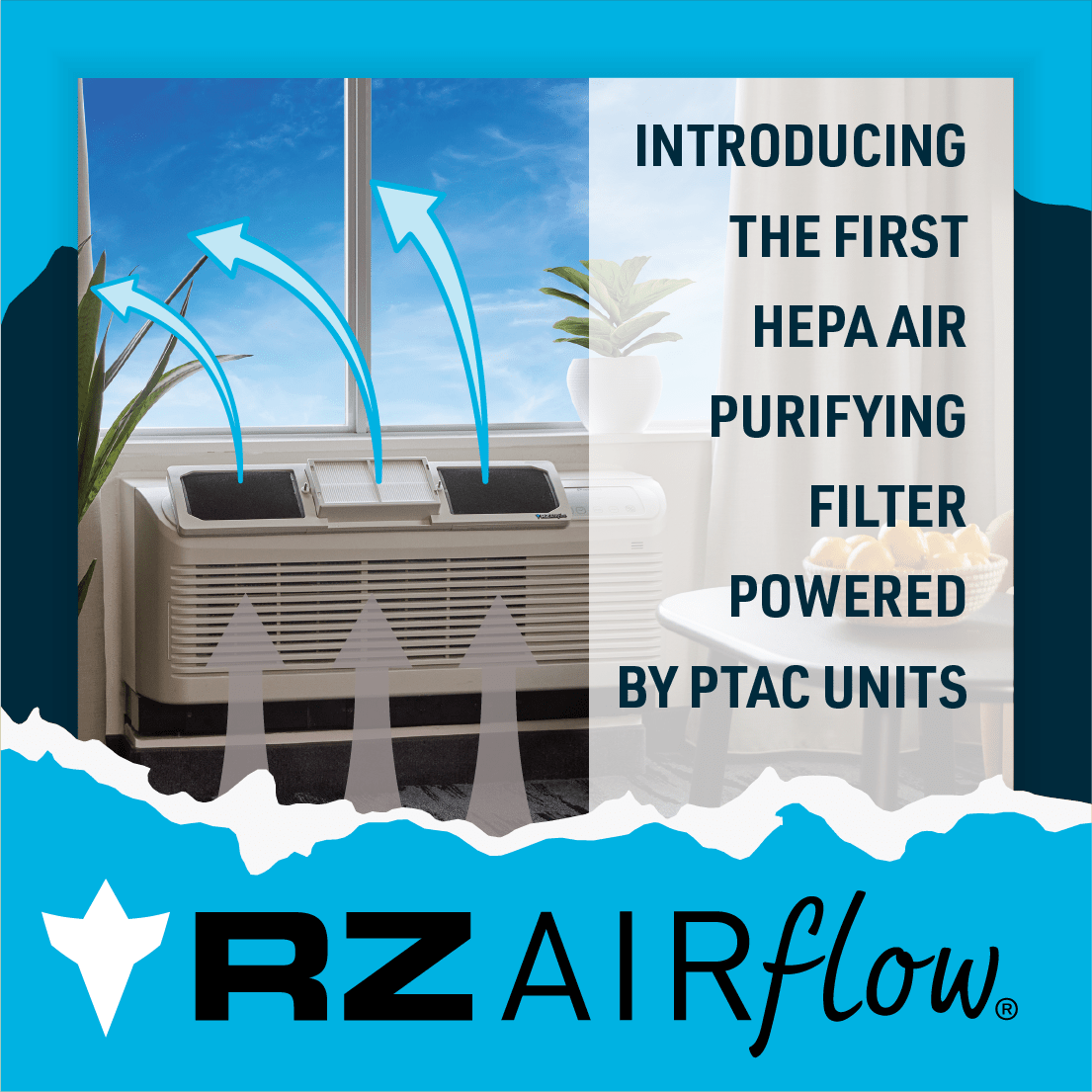
The RZ AIRFlow installs directly into your existing PTAC unit — the wall-mounted heating and cooling system already present in most hotel rooms, senior living suites, and apartments. Rather than adding a new air-moving device to the room, it upgrades the existing PTAC system to deliver True HEPA 99.97% filtration and active carbon organic odor reduction through the PTAC's existing airflow — distributing filtered air throughout the room with every heating and cooling cycle.
Head-to-Head Comparison: RZ AIRFlow vs Standalone Air Purifiers
Filtration Standard
- RZ AIRFlow — True HEPA 99.97% filtration of particles down to 0.3 microns + active carbon layer designed to help reduce organic odors. Consistent, verified standard.
- Standalone purifiers — varies enormously by model and price point. True HEPA 99.97% is available in premium models; many budget and mid-range purifiers use lower-efficiency filters marketed with HEPA-like language that does not meet the True HEPA standard. Always verify the specific filtration standard before purchasing.
Room Coverage and Air Distribution
- RZ AIRFlow — filters air through the PTAC system and distributes it throughout the room via the PTAC's existing airflow pattern. Every heating and cooling cycle delivers filtered air room-wide — not just near the purifier unit.
- Standalone purifiers — filter air from a single location and return it to the immediate area around the unit. Effectiveness decreases with distance from the unit. In larger rooms or rooms with complex layouts, a single standalone purifier may not provide adequate coverage throughout the space.
Additional Noise
- RZ AIRFlow — zero additional noise. Uses the existing PTAC fan — no new fan motor, no new noise source in the room. The PTAC runs at its normal sound level whether or not the RZ AIRFlow is installed.
- Standalone purifiers — add fan noise to the room. Even quiet models produce audible fan noise, particularly at higher fan speeds needed for effective filtration. In hotel rooms and senior living suites where sleep quality matters, additional fan noise is a meaningful consideration.
Floor Space and Room Footprint
- RZ AIRFlow — zero floor footprint. Installs inside the existing PTAC unit. No floor space required, no surface space required, no visual impact on the room.
- Standalone purifiers — require dedicated floor or surface space. In hotel rooms and senior living suites where space is limited, a standalone purifier occupies meaningful floor or surface area that could otherwise be used by the guest or resident.
Trip and Fall Hazard
- RZ AIRFlow — no trip or fall hazard. Installs inside the PTAC unit with no floor cords, no freestanding units, and no new objects in the room's walking path.
- Standalone purifiers — introduce a freestanding unit and power cord into the room. In senior living and assisted living environments where fall prevention is a critical safety priority, this is a meaningful concern. In hotel rooms, power cords across walking paths create trip hazards for guests.
Organic Odor Reduction
- RZ AIRFlow — active carbon layer included as standard. Designed to help reduce organic odors from cleaning products, smoke, cooking, pets, and building materials through every PTAC air cycle.
- Standalone purifiers — active carbon is available in some models but not all. Budget and mid-range purifiers often omit active carbon or include only a thin carbon pre-filter with limited adsorption capacity. Verify active carbon inclusion and capacity before purchasing for odor reduction applications.
Installation and Setup
- RZ AIRFlow — installs into existing PTAC unit in minutes. No tools, no professional service, no permanent modification. Removable and redeployable.
- Standalone purifiers — plug in and place. Simple setup, but requires identifying an appropriate placement location with access to a power outlet and adequate clearance for airflow.
Portability
- RZ AIRFlow — compact and portable. Designed to be removed and reinstalled in different PTAC units — move between rooms, take on travel, redeploy across a property. Available with a premium travel case for hotel guests who want clean air wherever they stay.
- Standalone purifiers — most are not designed for portability. Larger units are heavy and awkward to move; smaller travel purifiers sacrifice filtration performance for portability.
Cost at Scale
- RZ AIRFlow — low per-room cost with no PTAC replacement required. For hotel operators and senior living facilities deploying across many rooms, the RZ AIRFlow's per-room cost is significantly lower than equivalent standalone purifier deployment at scale.
- Standalone purifiers — per-unit cost multiplied across every room. Premium True HEPA standalone purifiers with active carbon cost $150–500+ per unit. Across a 100-room hotel or 80-suite senior living facility, that's $15,000–40,000+ in purifier costs alone — before ongoing filter replacement and unit maintenance.
Maintenance
- RZ AIRFlow — scheduled HEPA and active carbon filter replacement. Simple, low-disruption process that can be incorporated into existing room maintenance routines.
- Standalone purifiers — filter replacement plus periodic unit cleaning. Multiple filter types in many models (pre-filter, HEPA, carbon) with different replacement intervals. Units themselves require periodic cleaning to maintain performance.
Summary Comparison Table
| Feature | RZ AIRFlow | Standalone Air Purifier |
|---|---|---|
| Filtration standard | True HEPA 99.97% (consistent) | Varies — verify before purchasing |
| Room coverage | Room-wide via PTAC airflow | Single location, limited range |
| Additional noise | None | Fan noise added to room |
| Floor footprint | Zero | Requires floor/surface space |
| Trip/fall hazard | None | Cord and unit hazard |
| Active carbon odor help | Included as standard | Varies by model |
| Installation | Minutes, no tools | Plug in and place |
| Portability | Compact, travel-ready | Most not designed for travel |
| Cost at scale (100 rooms) | Low — fraction of standalone cost | $15,000–40,000+ for True HEPA models |
| Maintenance | Filter replacement only | Filter replacement + unit cleaning |
When a Standalone Air Purifier Makes More Sense
The RZ AIRFlow is the better choice for most PTAC-equipped spaces — but there are situations where a standalone purifier may be more appropriate:
- Spaces without PTAC units — the RZ AIRFlow requires a PTAC unit to install into. For spaces with central HVAC, mini-splits, or no mechanical heating/cooling, a standalone purifier is the appropriate choice.
- Supplemental coverage in very large spaces — for unusually large rooms where a single PTAC unit's airflow may not provide adequate coverage, a standalone purifier can supplement the RZ AIRFlow's PTAC-based filtration.
- Spaces where PTAC operation is infrequent — the RZ AIRFlow filters air through the PTAC system; if the PTAC runs infrequently, a standalone purifier with its own continuous fan may provide more consistent filtration.
The Verdict: For PTAC-Equipped Spaces, RZ AIRFlow Wins on Every Practical Dimension
For hotel rooms, senior living suites, assisted living facilities, and apartments equipped with standard PTAC units — the RZ AIRFlow is the smarter air quality upgrade on every practical dimension that matters for these settings:
- True HEPA 99.97% filtration — consistent, verified standard
- Room-wide coverage through existing PTAC airflow
- Zero additional noise in the room
- Zero floor footprint, zero trip/fall hazard
- Active carbon organic odor reduction included
- Significantly lower cost at scale for operators
- Portable for guests who want clean air on travel
Frequently Asked Questions: RZ AIRFlow vs Standalone Purifiers
Is the RZ AIRFlow as effective as a standalone HEPA air purifier?
For PTAC-equipped spaces, the RZ AIRFlow delivers True HEPA 99.97% filtration through the existing PTAC airflow system — the same filtration standard as premium standalone purifiers, with the additional advantage of room-wide air distribution through the PTAC rather than single-point filtration. For spaces with PTAC units, the RZ AIRFlow is designed to be at least as effective as a comparable standalone purifier for particulate filtration, with meaningful practical advantages in noise, footprint, and cost at scale.
Can I use both the RZ AIRFlow and a standalone purifier together?
Yes. For spaces where maximum air quality improvement is the priority — or for very large rooms — using the RZ AIRFlow in the PTAC unit alongside a standalone purifier can provide complementary coverage. The RZ AIRFlow handles PTAC-recirculated air; a standalone purifier can provide additional filtration capacity in the room.
Does the RZ AIRFlow work if the PTAC is only running occasionally?
The RZ AIRFlow filters air through the PTAC system with every heating and cooling cycle. If the PTAC runs infrequently, the RZ AIRFlow's filtration cycles are correspondingly less frequent. For spaces where continuous air filtration is needed regardless of PTAC operation, a standalone purifier running continuously may provide more consistent filtration between PTAC cycles.
What standalone air purifiers would you compare to the RZ AIRFlow?
For a fair comparison, look for standalone purifiers with True HEPA 99.97% certification (not "HEPA-type" or "HEPA-like"), an active carbon layer with meaningful adsorption capacity (not just a thin carbon pre-filter), and a CADR rating appropriate for your room size. Premium models from established air purification brands in the $200–500 range typically meet these standards — but at significantly higher per-room cost than the RZ AIRFlow for operators deploying at scale.
The Smarter PTAC Air Quality Upgrade — Built by RZ Mask
For the millions of hotel rooms, senior living suites, assisted living facilities, and apartments equipped with standard PTAC units — the RZ AIRFlow is designed to be the smarter air quality upgrade: True HEPA 99.97% filtration, active carbon organic odor reduction, zero noise, zero footprint, zero fall hazard, and significantly lower cost at scale than equivalent standalone purifier deployment.
Built by RZ Mask — the company behind 3+ million respiratory protection products sold worldwide since 2011 — the RZ AIRFlow brings precision filtration engineering to the PTAC infrastructure that's already in place.
🔗 Shop the RZ AIRFlow → | RZ AIRFlow for Hotels, Senior Living & Apartments → | Complete Indoor Air Quality Guide →
For indoor air quality guidance, visit the EPA Indoor Air Quality resource center. The RZ AIRFlow is not a medical device. Results vary based on environment, PTAC usage, and filter replacement frequency.
#RZAIRFlow #indoorairquality #PTAC #airpurifier #hotelmanagement #seniorliving #assistedliving #apartmentliving #cleanair #IAQ #facilitymanagement #RZMask #breathebetter #HEPAfiltration #airquality #propertymanagement #hotellife






Cannabis Smoke Odor in Hotel Rooms: The Real Cost to Hospitality — and How the RZ AIRFlow Can Help
Indoor Air Quality: The Complete Guide to What You're Breathing and How to Fix It